

A Habsburg imperial experiment in Mexico

Published by: Harvard University Press
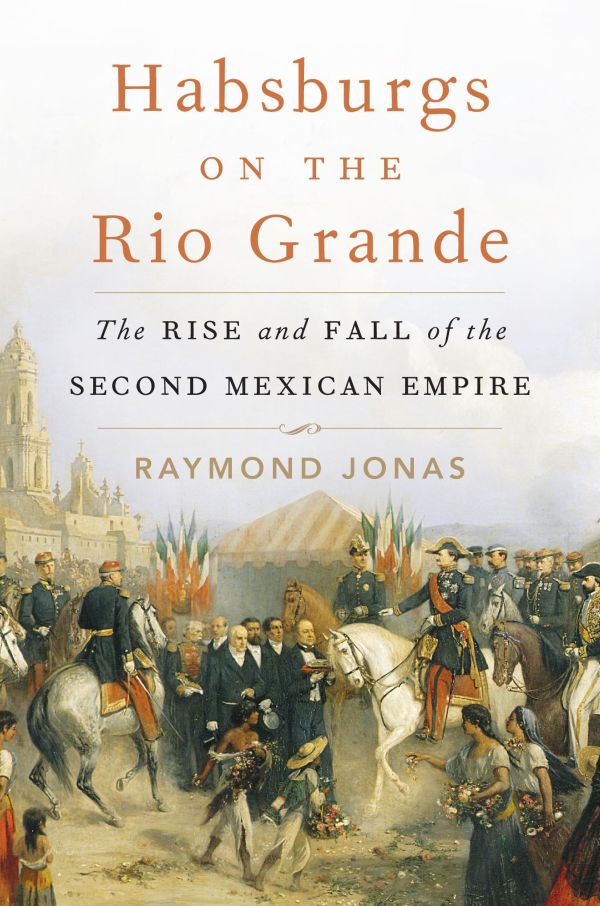
More than a decade after publishing The Battle of Adwa (Harvard University Press, 2011), Raymond Jonas returns with another engaging study of a failed overseas intervention by European powers in the second half of the nineteenth century. This time, he retells the story of Maximilian, the Habsburg archduke who briefly ruled as emperor of Mexico as a result of Napoleon III’s adventurist foreign policy. The title Habsburgs on the Rio Grande is well chosen, if somewhat misleading—not only because the Habsburgs in question, or rather one Habsburg and his wife, never managed to extend their rule to areas in the vicinity of the river that later became the permanent border between Mexico and the United States. Rather, Jonas reconstructs the Mexican imperial experiment of the 1860s as a vantage point “from which to understand the globally destabilizing effect of US encroachment in the guise of Manifest Destiny” (p. 5). In this respect, the book could hardly be timelier.
Jonas eases the reader into the subject through careful contextualization, outlining the ideological and economic rationales behind European intervention in Mexico. Alarmed by the effects of political developments in the Mexican republic on the investments of their nationals, and by the relentless territorial expansion of the United States, Spain, Britain, and France attempted to exploit the distraction of the US Civil War to pursue their interests across the Atlantic. This fragile European unity quickly collapsed, leaving France to shoulder the burden of the military campaign and subsequent pacification efforts (chapters 1–4). It was into this hastily secured setting that Maximilian arrived in May 1864, accompanied by his wife Charlotte, daughter of the king of the Belgians. Jonas vividly conveys the couple’s shared ambition and political naivety as he traces how they were persuaded to accept the Mexican crown, detailing how they arrived amid a peculiar mix of ominous signs and triumphal celebrations and set about constructing an enlightened—yet thoroughly Catholic—imperial court in Mexico City (chapters 5–7).
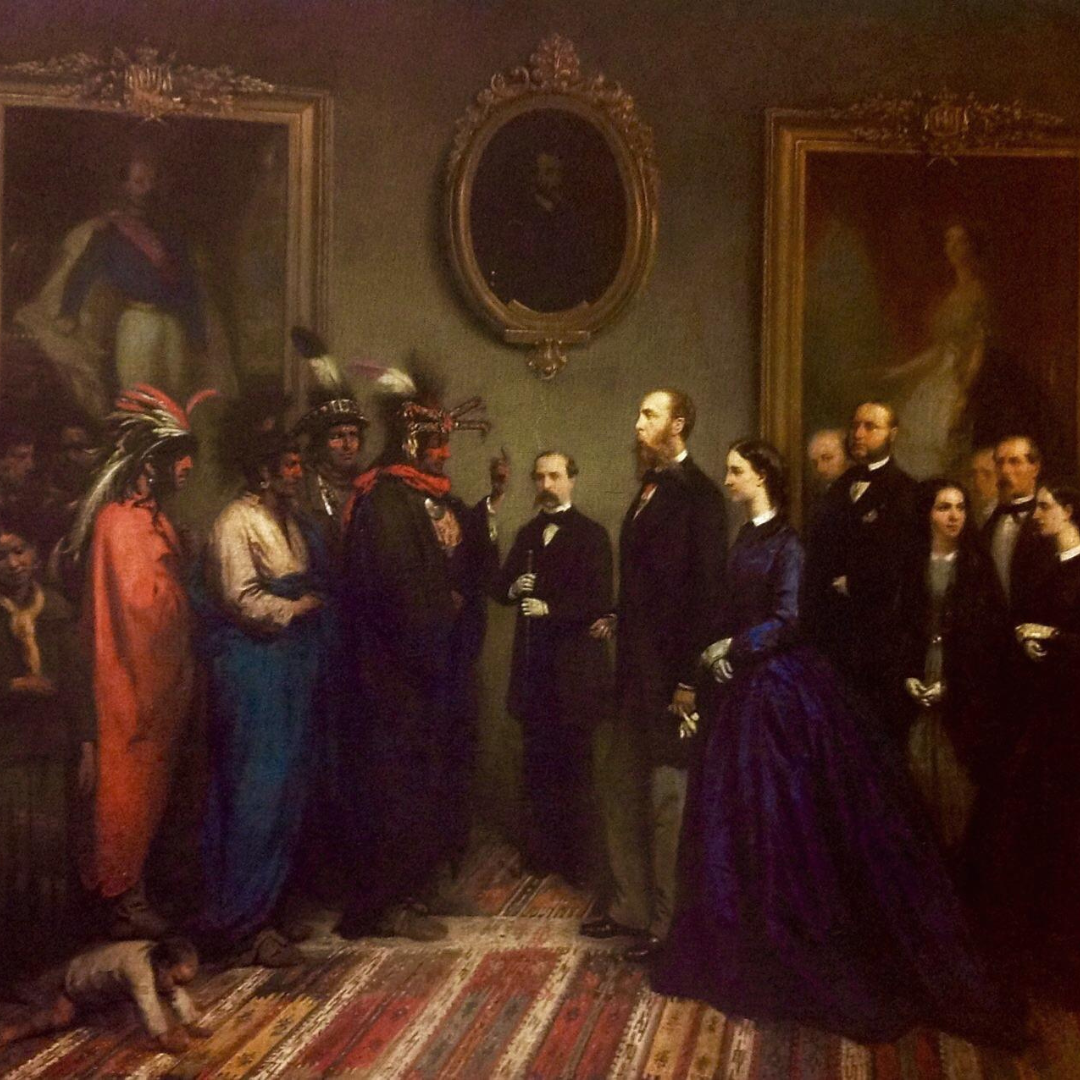
By what means, Jonas asks, was such a “makeshift monarchy” to be sustained (p. 105)? Beyond French bayonets, Mexico’s Catholic hierarchy and criollo elites disgruntled with the republic, Maximilian and Charlotte placed their hopes in several fragile pillars: the Indigenous population, idealized through paternalist and romantic assumptions; Austrian and Belgian volunteer units, in reality recruited from across Europe and intended to relieve French forces; and landowners from the southern United States, expected to seek a new future under imperial rule following the collapse of the Confederacy (chapters 8–9). None of these supports proved sufficient. The French began withdrawing from an intervention that had become both costly and unpopular before Maximilian could organize an imperial army worthy of the name. His efforts fell prey to a lack of strategic foresight, petty rivalries, and outright racism, which prevented the effective integration of European volunteer forces with Mexican units under imperial command into a viable bulwark against the republican armies. In a desperate attempt to save the empire, Charlotte travelled to Europe to rally support among foreign governments (chapters 10–11).
Jonas strikes an impressive balance between narrative momentum and empirical depth, guiding the reader through the results of extensive archival research conducted in five countries on both sides of the Atlantic.
At this point, Jonas takes his leave of the empress, leaving the reader wondering about her fate until her death six decades later, in 1927—an intriguing story in its own right. The failure of her diplomatic mission cost Charlotte her sanity, even as it ultimately saved her life. Maximilian, by contrast—urged on by supporters already preparing their own escape—remained in Mexico. In the final act of his reign, he personally led the remnants of the imperial forces on a five-day march to Querétaro, northwest of Mexico City. There, his indecision and his generals’ infighting squandered even the slim chances of success against the advancing republican armies, culminating in Maximilian’s surrender, trial, and execution (chapters 12–15).
While Maximilian and Charlotte’s Mexican rule is reasonably well known, Jonas’s narrative ranges so widely—moving between Trieste and Mexico City, California and Egypt, Vienna and Paris—that it is easy to forget that fewer than six years separate the beginning of European intervention, marked by the landing of Spanish forces at Veracruz in December 1861, and Maximilian’s execution on 19 June 1867. Jonas strikes an impressive balance between narrative momentum and empirical depth, guiding the reader through the results of extensive archival research conducted in five countries on both sides of the Atlantic. These sources are carefully listed at the end of the book. Although the absence of a conventional bibliography may cause minor inconvenience, Jonas compensates by making an alphabetized list of his print sources available online.
Habsburgs on the Rio Grande ultimately examines European governments grappling with the rise of the United States—viewed simultaneously as a “predatory American republic” (p. 4) capable of inflicting serious harm and as an indispensable economic partner.
The book will appeal to historians working on Habsburg history, the national histories of Mexico, the United States, France, and Austria, military history, and nineteenth-century imperialism more broadly. Jonas adds nuance to our understanding of Maximilian and Charlotte—their influences, motivations, talents, and shortcomings—as well as the ways they were perceived by the various actors invested in the imperial project. He also populates the narrative with a cast of vivid characters: Michel Chevalier and his racialized views on geopolitics; Archbishop Labastida, whose refusal to bend to political realities was matched by a keen instinct for self-preservation; the Roman intrigues of the Württemberg-born cleric Agustín Fischer; and Carl Khevenhüller-Metsch, whose trajectory led from a pageant at the Spanish Riding School in Vienna to flight from his creditors all the way to Mexico. Such episodes add texture and vitality to the story of the failed revival of Habsburg rule in the Americas.
Despite this attention to his characters, Jonas never loses sight of the broader geopolitical context. Habsburgs on the Rio Grande ultimately examines European governments grappling with the rise of the United States—viewed simultaneously as a “predatory American republic” (p. 4) capable of inflicting serious harm and as an indispensable economic partner. The Mexican intervention emerges as a half-formed attempt to resolve this dilemma. The alliance between Spain, Britain, and France collapsed before Maximilian even accepted the crown; France withdrew once the project became politically toxic and financially draining; and the strategic opening created by the US Civil War closed before the empire could establish itself—something that would have been difficult even with greater European commitment. Jonas’ combination of systematic research and engaging prose powerfully conveys the striking contemporary relevance of the geopolitical lessons of Maximilian and Charlotte’s ephemeral Mexican empire.
Barnabas Szabo is a postdoctoral research associate at the Centre for Geopolitics, University of Cambridge. After completing graduate programs in International Relations and Nationalism Studies, he obtained his PhD in Comparative History at Central European University (Budapest/Vienna). Barnabas’ research focuses on the establishment of the early modern British and Spanish unions in the context of the globalizing commercial and military competition between European powers in the long eighteenth century.