

A longue durée history of Bukovina
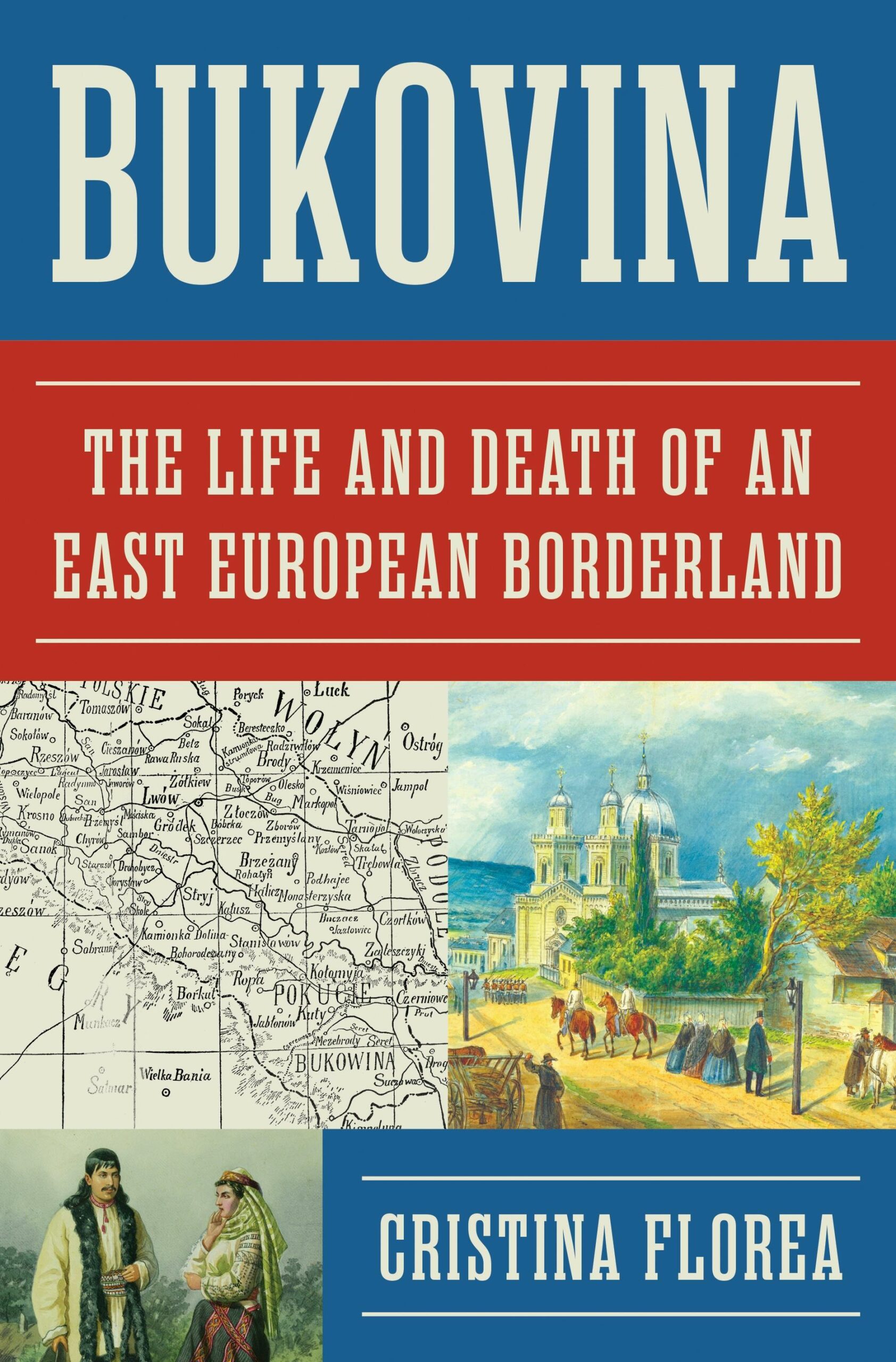
Published by: Princeton University Press
With her first book, Bukovina: The Life and Death of an East European Borderland, published in 2025 by Princeton University Press, the Cornell-based historian Cristina Florea aims to provide a definitive history of this small Eastern European region, now divided between Romania and Ukraine. The study spans nearly two centuries, tracing Bukovina from its formation around 1775 to its disappearance from the map in 1945.
Carved out in the aftermath of the Russo-Turkish wars, Bukovina became a Habsburg province and later an Austrian crown land until 1918. After passing to Romania and changing hands several times during the Second World War, it was ultimately partitioned between Romania and Soviet Ukraine and ceased to exist as a political entity. Thereafter, Bukovina persisted primarily in the memories of its former inhabitants and occasionally as an object of political contention, but no longer as a distinct unit of governance.
Despite its relatively small size, Bukovina has attracted considerable scholarly attention.1 Its liminal position between East and West, its multiethnic population – by 1900 the most ethnically diverse province of the Habsburg Empire – and its contested character, particularly between Romania and the Soviet Union (later Ukraine), have drawn interest. There are substantial bodies of literature in multiple languages and across different historiographical traditions. What distinguishes Florea’s book is its comprehensive ambition; in her own words, it aspires to a “total” history (p. 4). While earlier scholarship has typically focused on specific periods and regimes, particular individuals or groups, or the culture of the city of Chernivtsi (Czernowitz, Cernăuți), Florea seeks to integrate these approaches and bridge these perspectives.
Rather than fragmenting the history, she seeks to recount it in a single, continuous, longue durée narrative in order to identify breaks and continuities that have previously been overlooked.
She brings into view the rural population alongside the urban, the voices of intellectuals alongside those of peasants, and Ukrainians and Romanians alongside Jews and Germans, the four largest self-defined groups in the region. Yet ultimately her object is neither rulers nor ruled, but Bukovina as a space to be governed and “integrated” – the location of successive imperial projects. She traces the repeated attempts of various regimes to remake the region “in their own image” – and how these efforts were experienced and negotiated by its various inhabitants. In so doing, this book speaks to recent scholarship, offering new perspectives on the transformation of modern sovereignty based on the example of the Habsburg Empire.2
Florea sets out her argument clearly in the introduction. Rather than fragmenting the history, she seeks to recount it in a single, continuous, longue durée narrative in order to identify breaks and continuities that have previously been overlooked (p. 16). Her central claim is that existing historiography has overemphasized rupture while downplaying continuity. A close examination of conditions on the ground, she argues, reveals that although ideologies shifted, many practices, policies, and aims remained remarkably consistent: control, centralization, modernization, education, reform, and measures aimed at producing legitimacy and loyalty. This perspective allows her to identify not only convergences and divergences between liberal and illiberal projects, but also ironies, contradictions, and unintended consequences often missed in earlier studies of the region, and to draw parallels with other contexts of state and nation-building in and beyond Eastern Europe. The Habsburgs, Romanians, and Soviets each implemented policies familiar from other areas; their differing outcomes in Bukovina stemmed from local conditions and from how these regimes understood the region itself. All of this, in turn, unfolded against a backdrop of transregional, transnational, and necessarily global entanglements.
Structured in eight chapters, the book proceeds chronologically. It is notable, however, that history here unfolds at uneven speeds: the first three chapters capture roughly 150 years (1775-1914), whereas the final three address just the fifteen years between the 1930s and the end of the Second World War. This acceleration suggests, as other studies have done too, the particular significance of the modern period and the “age of extremes” in this region.3
Her linguistic range (Romanian, Ukrainian, Russian, German, French, Yiddish) is impressive, as is the breadth of her reading.
The most innovative and compelling chapters are those on the establishment of Habsburg rule, the First World War, the radicalization of Romanian politics, and the Soviet interlude (1939-1941). Here, the combination of new primary source material with the conceptual argument about modes and instruments of governance and the rethinking of conventional junctures – considering the consequences of consecutive occupations and population policies and “competition, emulation, absorbing” (p. 5) – is particularly effective, and the nuanced reworking of an already familiar picture is highly engaging.
Given the scope of the synthesis and the depth of the research, Florea draws on a vast array of published scholarship and sources. She also makes extensive use of unpublished primary material from Ukrainian, Romanian, and Austrian archives, especially. Her linguistic range (Romanian, Ukrainian, Russian, German, French, Yiddish) is impressive, as is the breadth of her reading. Nearly every sentence is supported by a footnote, and direct citations – though smoothly integrated into the narrative – appear more frequently than in most comparable monographs. The reader cannot fail to appreciate the immense scholarly effort behind the book, further underscored by the inclusion of numerous images.
At times, the density of information can be overwhelming, and the shifts in perspective demanding. The multiperspectival approach and the necessary concision of a synthetic study leave limited room for sustained analysis of individual phenomena or sources. The character, representativeness, and context of the cited materials are rarely discussed, and the reader may occasionally be left wondering about the precise nature of the voices being quoted. More generally, the book offers little explicit heuristic reflection, requiring the reader to place considerable trust in the author’s expertise and judgment.
Nonetheless, Florea has succeeded in retelling the history of Bukovina as a whole with impressive breadth and confidence. Her argument resonates strongly, and the ongoing war in Ukraine, discussed in the epilogue, lends it added and sobering relevance. The book thus represents a long-awaited and much-needed synthesis and a significant scholarly achievement.
Gaëlle Fisher is a researcher at the Leibniz Institute for the History and Culture of Eastern Europe (GWZO) in Leipzig. Previously, she was a postdoctoral fellow at the University of Bielefeld and at the Centre for Holocaust Studies of the Leibniz Institute for Contemporary History (IfZ) in Munich. She holds a PhD in history from University College London. She is the author of Resettlers and Survivors: Bukovina and the Politics of Belonging in West Germany and Israel, 1945-1989 (Berghahn Books 2020), as well as numerous articles on the history and legacy of the Holocaust. Her current book project explores Jewish and international responses to antisemitic policies and genocide in Romania before and during World War II.
1 Most recently: Mariana Hausleitner, Bukowina: eine europäische Vielvölkerregion (Deutsches Kulturforum östliches Europa, 2026); Niklas Bernsand, From Czernowitz to Chernivtsi: Remembering pre-WWII Cultural Diversity in a post-Soviet Western Ukrainian City (Lund University, 2025). Maren Röger, Karten in die Moderne: Eine visuelle Geschichte des multiethnischen Grenzlandes Bukowina 1895-1918 (Sandstein, 2023).
2 See e.g. Natasha Wheatley, The Life and Death of States: Central Europe and the Transformation of Modern Sovereignty (Princeton University Press, 2023).
3 See e.g. Tarik Cyril Amar, The Paradox of Ukrainian Lviv: A Borderland City between Stalinists, Nazis, and Nationalists (Cornell University Press, 2015).