

Amidst displacement and ruptures: An intellectual biography of Omeljan Pritsak
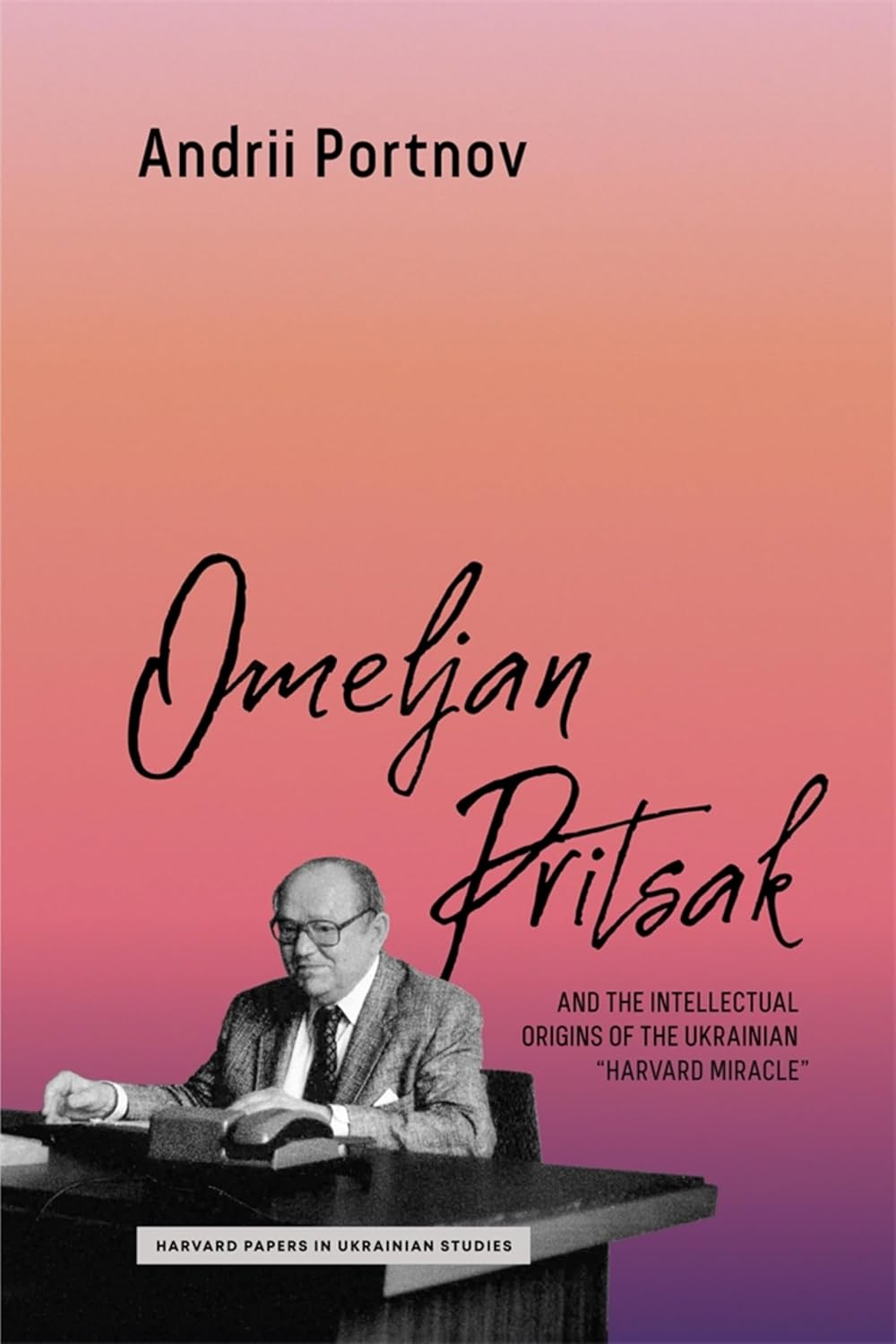
Published by: Harvard Ukrainian Research Institute
Andrii Portnov’s Omeljan Pritsak and the Intellectual Origins of the Ukrainian “Harvard Miracle” is an invitation to discover the life and ideas of a Ukrainian scholar who made the Harvard Ukrainian Research Institute possible. Although Pritsak’s work is well-known to specialists in Turkic and Ukrainian studies, this study presents the first serious attempt to evaluate his intellectual contributions beyond disciplinary boundaries. The author puts ideas at the center of the book’s six short chapters to show various angles of the rise of a diaspora scholar who made it through post-Second World War challenges and managed to earn a name for himself in several countries.
Portnov smartly blends chronological and thematic approaches to biography to explain the various activities that his protagonist contributed to. Using rich source material from Germany, Ukraine, and the US, the author shows why Pritsak is a special case to consider for those who are interested in the intellectual history of the twentieth century in general and the history of diaspora and exile scholars in particular. Though this biography, a story of peripheral scholarship in interwar Poland, the wartime Third Reich, and post-war Germany, the US, and USSR is revealed. Portnov masterfully introduces various vignettes to clarify whom Pritsak interacted with, whom he questioned, and who helped him throughout his long lifetime journey. Thus, Pritsak appears as a product of intellectual and social mixes caused by the First World War and responses to the political radicalism of the 1930s, the years of his youth.
One figure is distinguished among others in the book. Chapter two is dedicated entirely to Pritsak’s critique of Mykhailo Hrushevskyi. This critique formally started in Nazi-occupied Lviv in 1943 and lasted through the subsequent decades, including when Pritsak was appointed to the first chair in Ukrainian history at Harvard, which was named after the object of his criticism. Portnov demonstrates clearly that the roots of the critique were both political and intellectual, as Pritsak, following the so-called statist school of Volodymyr Lypynskyi, considered Hrushevskyi’s populist attitudes as methodologically weak (p. 31). Hrushevsky’s multi-volume History of Ukraine-Rus was the most obvious target for questioning that Pritsak exercised in 1943 and 1966. The latter effort was in the form of a lecture at Harvard, which, as Portnov highlights, can be treated as both “intellectual provocation and reactualization of Hrushevskyi” (p. 32). While the reactualization aligned with Pritsak’s Harvard Project, the provocation corresponded with the approaches of Pritsak the academician, as Portnov often reminds his readers.
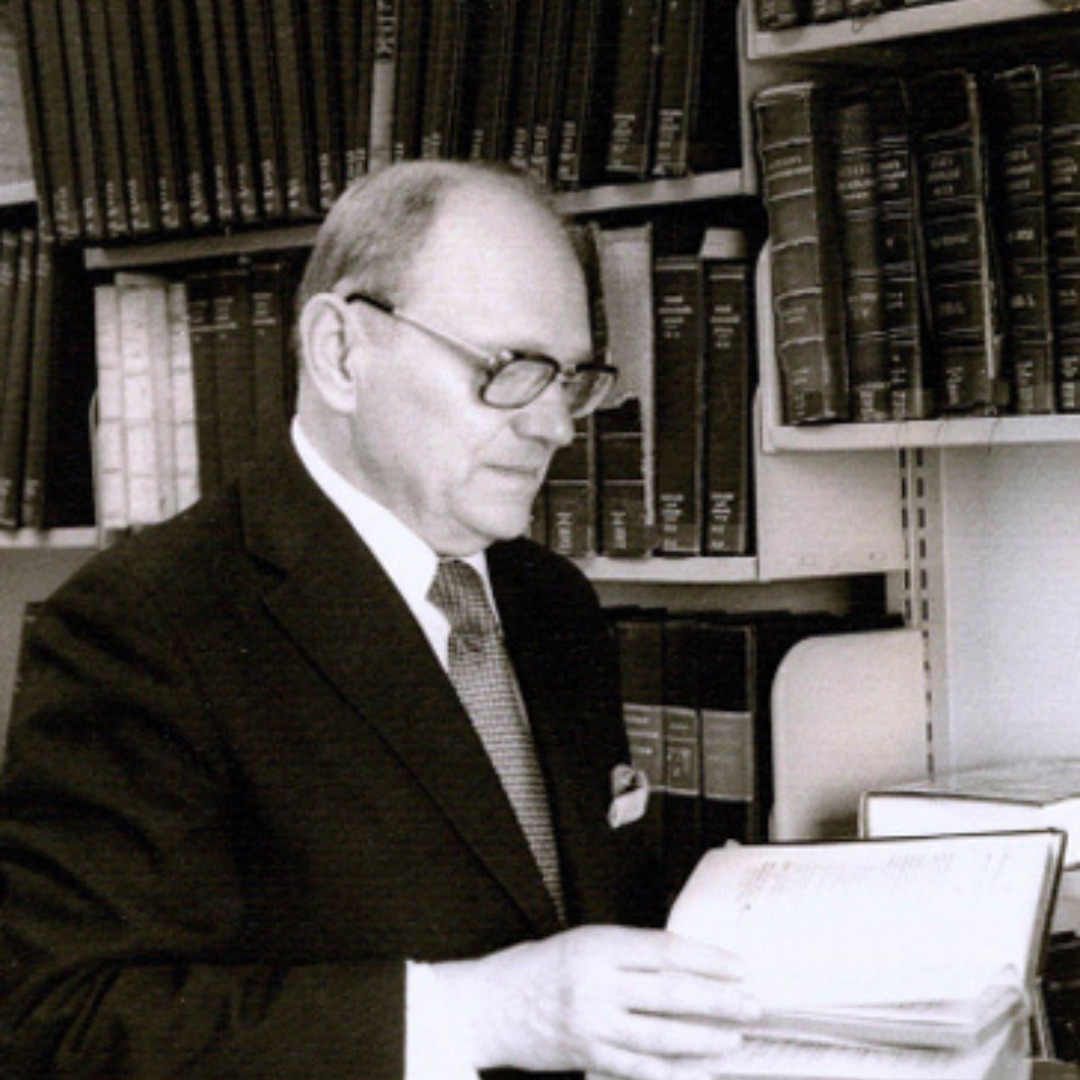
Intellectual sharpness and the ability to convince others helped the young POW not only survive the Second World War but also to make a name for himself in prominent academic environments worldwide.
To be in contrast to Hrushevskyi or to become Hrushevskyi himself – these paths were open to Pritsak. On the one hand, his intellectual contributions clearly signal the questioning of his predecessor, who remained mostly unknown in the German and Anglophone academic worlds, where Pritsak made his post-war career. On the other hand, Pritsak’s own activities and ambitions to publish the multi-volume The Origins of Rus’ resembled those of Hrushevskyi – a parallel that Portnov offers in the conclusions to his volume (p. 71). One way or another, the scholar’s ambitions were above his capacities, and his magnum opus was left unfinished. Yet despite the lack of full-scale recognition from his colleagues, Pritsak’s academic career was more than successful. Intellectual sharpness and the ability to convince others helped the young POW not only survive the Second World War but also to make a name for himself in prominent academic environments worldwide.
The accent on the contrast between Pritsak and Hrushevskyi, however, overshadows other aspects of the former’s intellectual life. Willing to present his protagonist in broader intellectual contexts, Portnov introduces multiple vignettes about intellectuals who had a place in Pritsak’s life, but these interventions finish as fast as the chapters of the book do. The author is open about the limitations in the biography, which he, in the end, calls “observations” (p. 71). With that recognition, he places the vignettes onto the palimpsest of Ukraine’s modern intellectual history, seemingly inviting his audience to think beyond the story of an individual, while, in fact, asking them to contribute to this story.
Some of the observations that Portnov makes would also benefit from further explanation. The book offers a frame to observe the life of Omeljan Pritsak, whose portrait is revealed to the observer as a mosaic of sketches. Among others, the author refers to the organizational talent of his protagonist throughout the book but does not clarify how that talent had developed. Although his intellectual activities are at the center of the study, in Pritsak’s case, the ability to institutionalize intellectual work was equally important. Additional elaboration on this development would not only reinforce the thesis about Pritsak’s resemblance to Hrushevskyi but also open a new angle for studying intellectual history of émigré scholars. For instance, what Portnov describes as “deliberate provocation” (p. 55) or “exaggerations” (p. 66) may equally be interpreted as the survival skills developed by a Ukrainian historian who outlived the twentieth century.
The need to survive, to get through the ruptures of wars, and to adapt to new environments must have also left an impact on Pritsak’s life. While Portnov presents him as a product of the intellectual milieu of the interwar Second Polish Republic, his experience of the Second World War, which the author calls an “unbelievable adventure,” should also be considered. Portnov, a wartime historian himself, has elaborated on the changes the war brought for the profession, but somehow his protagonist appears to be affected by it only momentarily, with his “academic conscience” preserved until the end (p. 57).1 Yet even Pritsak’s retrospective critique of the views of radical nationalist thinker Dmytro Dontsov years later (p. 4) may have been reinforced by his wartime encounters. Moreover, the book stresses the need to further study the protagonist’s lived experience during the war but somehow does not mention its potential echo years later.
What does it mean to become a Harvard professor with the background of a doctorate gained in post-Nazi Germany, to be in opposition to the radical wings of the Ukrainian diaspora, and to study Ukrainian history after spending decades working on Turkic languages? Portnov highlights the importance of preserving historical optimism and cultivating intellectual ambition above all. For Pritsak himself, there may have been multiple additional answers, for which this concise biography offers a few insightful observations.
Yevhen Yashchuk is a DPhil student in Global and Imperial History at the University of Oxford. He is interested in the imperial history, media history, and intellectual history of East Central Europe in the nineteenth century and topics in contemporary memory politics. Yevhen is currently finishing his dissertation on the transimperial history of Great Eastern Crisis, with the focus on everyday life in Kyiv and Lviv between 1875 and 1878. Since 2022, he has contributed to CEU Invisible University for Ukraine as a mentor and student coordinator. He is also a founding member of the Oxford Ukraine Hub and a co-editor of Peripheral Histories and Visible Ukraine.
1 See e.g., Andrii Portnov, “Dnipro. Writing and Reading the City’s Biography in a Time of War,” Jordan Center for the Advanced Study of Russia, accessed 28 February, 2026.