

Central European perspectives on the American Conquest
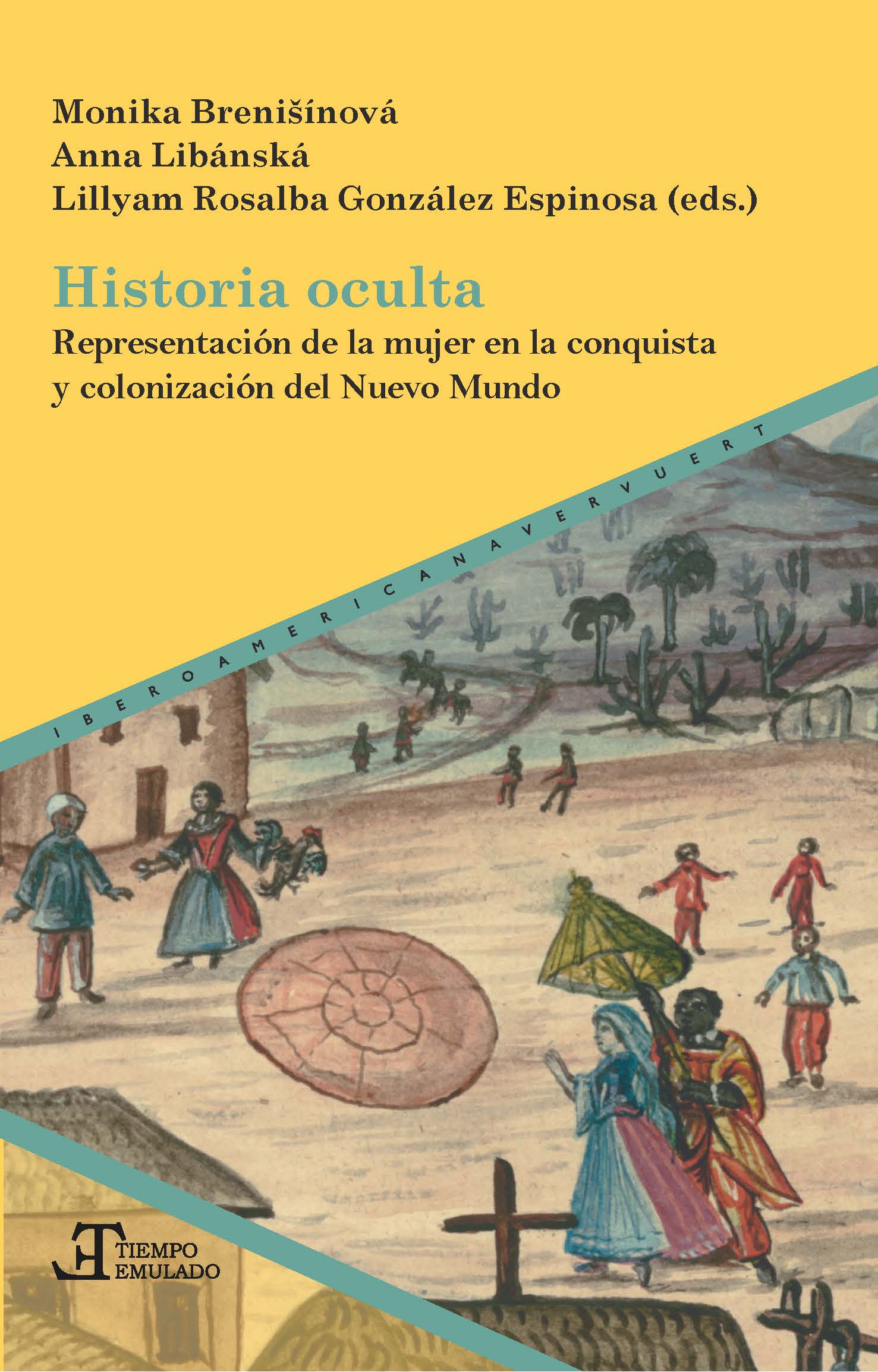
Published by: Iberoamericana Vervuert
What could a woman who took part in the early colonization of the Caribbean and Mexico, fell out of favour with Hernán Cortés, and testified during the investigation into the death of his first wife possibly have to do with the Bohemian lands? Surprisingly, quite a lot. Mari Hernández later married Juan Alemán, a conquistador who came from Bohemia. Drawing on scattered archival traces, Czech Ibero-Americanist Simona Binková reconstructs the life of a woman who stands outside the grand narratives of the conquest, yet emerges from the surviving sources as an active and self-confident historical actor. Mari’s story also shows that a Central European perspective on the history of the conquest and colonization of the Americas need not be a view from the periphery. On the contrary, it can reveal connections that remain less visible from more traditional scholarly perspectives.
Yet this is precisely what the authors have succeeded in doing – and this should be stated right from the outset. Drawing on a wide range of textual and visual sources, this predominantly female team, with many years of experience in the field, has produced a book that seeks to identify and reconstruct women’s voices and personalities , presenting them not only as objects of historical narratives but also as subjects of their own actions in the conquest and colonization of the Americas. The consistent gendered reading is in itself one of the book’s principal strengths: it opens up a still relatively little-travelled avenue of research into conquest and colonization and makes it possible to ask new questions of familiar sources and events.
a Central European viewpoint that makes it possible to approach colonial America from a scholarly environment that stands outside direct Iberian colonial expansion while nevertheless being connected to it in many ways.
The composition of the team is itself noteworthy given the subject under investigation. Its centre of gravity lies in Czech academia, particularly at the Faculty of Arts of Charles University, with which Monika Brenišínová, Simona Binková, Markéta Křížová, and Anna Libánská are affiliated. An international dimension is provided by Alberto Baena Zapatero of the University of Salamanca and the Colombian literary scholar Lillyam Rosalba González Espinosa, now based at the University of Ostrava, Czech Republic. The team is also markedly interdisciplinary, bringing together the history of Latin America and colonial society with art history and visual culture, literary studies, the study of cultural transfers, gender studies, and feminist and decolonial approaches. It is precisely this combination of different disciplinary perspectives with a Central European viewpoint that makes it possible to approach colonial America from a scholarly environment that stands outside direct Iberian colonial expansion while nevertheless being connected to it in many ways.
The book consists of a sophisticated introduction, seven thematic chapters, and an epilogue. Its structure is logical, although the individual chapters differ considerably in both methodology and genre. The introduction by Monika Brenišínová and Anna Libánská (pp. 9–61) is one of the book’s methodologically strongest sections. The authors convincingly historicize early modern notions of womanhood and femininity, situate them within broader power relations and religious and colonial contexts, and at the same time identify a fundamental problem that runs through the entire volume: how to reconstruct women’s voices and actions from sources that were mostly not created by women themselves and that recorded their experiences through contemporary gendered and colonial categories. The contributors work with the concept of the male gaze, and with a range of feminist and decolonial approaches. At the same time, the volume includes biographically oriented studies, analyses of visual representations, and chapters tracing cultural transfers between Europe and the Americas. This methodological diversity never feels like an end in itself: it reflects both the diversity of the sources and the different ways in which the historical presence of women – often recorded only indirectly or fragmentarily – can be reconstructed at all.
The women discussed in the book are not automatically turned into heroines simply because traditional historiography has marginalized them. They are often complex, conflicted, or problematic figures.
What unites all parts of the book is meticulous research. The contributors draw on a truly remarkable range of archival material from central and regional archives in the Czech Republic, Mexico, Italy, and Spain, demonstrate a firm command of the extensive secondary literature, and interpret their sources creatively. In a post-factual age, this should not be taken for granted. The result is solid historical scholarship in which the multilayered issue of the representation of women in the New World is thoughtfully and soberly situated within its broader historical context, without forced attempts to make the past speak directly to the present. Equally welcome is the absence of a celebratory tone, into which a publication with this focus might easily slip. The women discussed in the book are not automatically turned into heroines simply because traditional historiography has marginalized them. They are often complex, conflicted, or problematic figures. After all, so were their male contemporaries. Men, however, found their way into the sources rather more automatically, often by virtue of their positions of power; women’s traces, by contrast, have to be meticulously sought out.
The book’s interpretative and methodological range can be illustrated particularly well by two chapters that approach the subject in very different ways. Simona Binková’s study of Mari Hernández (pp. 63–98) is above all a fine example of traditional historical scholarship. Working patiently with scattered and often fragmentary sources, she reconstructs the lives of people who left only faint traces in the archives, while consistently distinguishing between what can be documented and what remains hypothetical. She builds on the work of previous scholars and gives them due credit without accepting their conclusions uncritically. She is cautious in her judgements and, by today’s standards, almost unbelievably generous towards the work of her predecessors. At the same time, she produces findings of her own: by connecting scattered documents, for example, she is able to identify the Mari Hernández mentioned in a royal cédula of 1539 with the woman who, ten years earlier, had testified in Cortés’s juicio de residencia. Yet she openly acknowledges those points at which even extensive archival research fails to provide an unequivocal answer.
Markéta Křížová takes a different route in her study of Indigenous women and Jesuit missionaries in north-western New Spain in the seventeenth and eighteenth centuries (pp. 199–222). Using the categories of the gender frontier (a concept introduced by Kathleen Brown in the late 2010s) and missionary masculinity, she shifts attention from the women themselves to the men who wrote about them and shows that the colonial and missionary gaze was itself structured by gender. Missionary masculinity, she argues, took shape within a broader environment in which relations between colonizers and colonized were expressed through gendered oppositions between activity and passivity, strength and weakness, discipline and spontaneity. At the same time, Křížová attempts to read female agency from sources produced by men and for the purposes of a male institution, precisely where their authors obscured it through stereotype, misunderstanding, or silence. The two studies thus nicely demonstrate the breadth of approaches offered by the volume: from an almost detective-like reconstruction of an individual life to a conceptual reading of the mechanisms through which colonial sources recorded, distorted, or rendered women’s experience invisible.
Yet the volume’s pronounced methodological and interpretative plurality also raises the question of whether these different approaches might have been brought together more systematically at the end of the book. There is no separate concluding synthesis; somewhat paradoxically, the Introduction partly fulfils this function, while the Epilogue does so only to a very limited extent. A final bringing together of the different approaches adopted in the individual chapters could have shown even more clearly what, taken together, they tell us about the possibilities – but also the limits – of reconstructing women’s experience and agency in the colonial Americas.
Historia oculta thus is one of those books that are not only needed, because they venture down relatively little-travelled paths, but are also a pleasure to read.
The meticulousness that characterizes the individual studies is also evident in the production of the book as a whole. The volume has a solid scholarly apparatus, a list of illustrations identifying their provenance, both an analytical and an onomastic index, and an extensive bibliography that demonstrates the contributors’ confident command of the relevant scholarship. The editorial care devoted to texts by authors with different linguistic backgrounds – peninsular and Colombian Spanish, as well as Spanish as a foreign language in the case of the Czech contributors – also deserves recognition. It is therefore a pity that the colophon does not indicate to whom the book owes its very good linguistic and editorial work. At a time when artificial intelligence can take over some of the work traditionally performed by language editors, this is no longer an insignificant piece of information. In any case, the result is a sound scholarly and, at the same time, surprisingly readable volume.
The Central European perspective, introduced at the very beginning through the unexpected Czech dimension of Mari Hernández’s story, is not merely a geographical characteristic of the team of contributors. To my mind, it is one of the most interesting interpretative features of the entire book. It shows that scholars working outside the traditional centres of Ibero-American studies can ask questions about the history of conquest and colonization that reveal new connections – and sometimes also bring into view female actors who have remained on the margins of traditional narratives. Historia oculta thus is one of those books that are not only needed, because they venture down relatively little-travelled paths, but are also a pleasure to read. It is all the more welcome, then, that the volume is freely available as an Open Access publication. It can be recommended to historians, art historians, and scholars in other fields of the humanities and social sciences interested not only in the concrete presence of women in the Americas during the period of conquest and colonization, but also in broader questions concerning their representation, historical agency, and the very possibility of recovering their voices from the sources.
Hana Bortlová-Vondráková is a researcher at the Institute of Contemporary History of the Czech Academy of Sciences and editor of the Czech Journal of Contemporary History. She earned her PhD in Ibero-American Studies from Charles University in Prague. Her research focuses on Latin America during the Cold War and Czechoslovak–Latin American relations, as well as the history of the Spanish Civil War and Francoism, and the broader connections between the Hispanic world and Central and Eastern Europe.