

Energoinvest and the making of global Yugoslavia
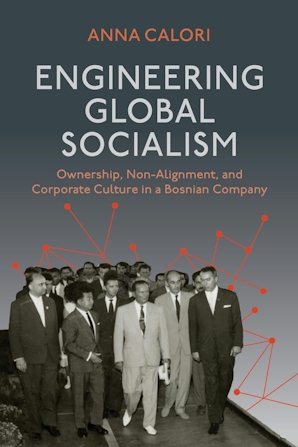
Published by: Indiana University Press
Anna Calori’s book is a significant contribution to Yugoslav labour history—a field that, given the emancipatory potential of workers’ self-management for industrial democracy, might be expected to be among the most vibrant. Only recently, however, has it acquired a contemporary scholarly profile, notably through Goran Musić’s Making and Breaking the Yugoslav Working Class (2021) and Chiara Bonfiglioli’s Women and Industry in the Balkans (2021). Calori shares with Bonfiglioli a periodization extending beyond the caesura of socialist collapse, focusing on the “long 1990s,” a period from the first major market reforms of 1988 to the neoliberal privatizations of 2002. Drawing on her work on “alternative globalizations”—linkages between socialist Eastern Europe and the decolonized Global South—and her deep knowledge of post-conflict dynamics in Bosnia and Herzegovina, Calori navigates these frameworks with authority, offering conclusions of contemporary relevance.
Central to her approach is the concept of “structures of expectations” as constitutive of industrial modernization and its transformation. Methodologically, she pursues this mainly through oral histories of (former) employees of Energoinvest, a major socialist-era Bosnian engineering and industrial conglomerate. Rather than treating these narratives merely as substitutes for lost or inaccessible corporate archives—a common issue in the Yugoslav context—Calori uses them to illuminate the persistent attachment to promises and expectations embedded in memories of the industrial past.
Calori documents how workers in Bosnia and Herzegovina, alongside contemporaneous economic discourse in Sarajevo, articulated a markedly different, more optimistic, perspective.
The temporal boundaries of this mnemonic structure are signalled by two topographical markers, the first of which—dating to the late 1980s, when the liberal entrepreneur-turned-politician Ante Marković assumed power in Belgrade—is particularly novel for conventional interpretations of late Yugoslav society. Although his reforms remained couched in the language of self-management and, in light of later neoliberal developments, represented a relatively benign form of participatory democracy—as recently shown by Marko Grdešić and Mislav Žitko in Socialist Economics in Yugoslavia (2026)—scholars largely agree that little socialism remained in Marković’s “New Socialism.”
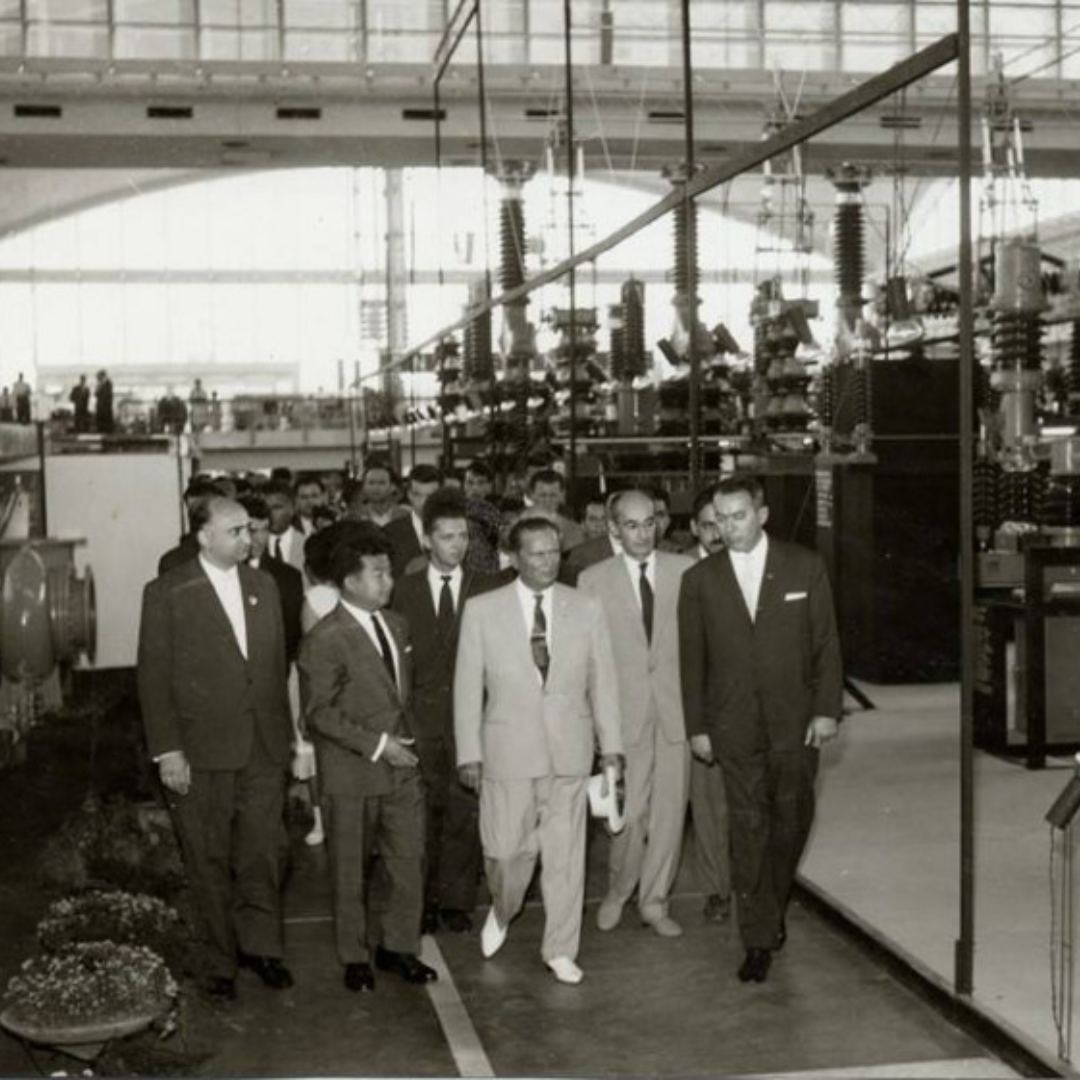
By contrast, Calori documents how workers in Bosnia and Herzegovina, alongside contemporaneous economic discourse in Sarajevo, articulated a markedly different, more optimistic, perspective. This outlook was decisively reinforced by the exceptional position of Energoinvest, one of the largest global engineering firms of the 1980s, whose reputation rested largely on its successes in the Global South, particularly in “non-aligned” markets. In this arena, Yugoslavia pursued a complex balance between global market integration and economic self-reliance. Among Energoinvest workers, this framework was so deeply internalized that they still often refer to “the market” and “the plan” almost interchangeably. While this may appear to be a somewhat simplified perspective, it does not substantially diverge from the conceptual contours, at the broader macro-level, of the New International Economic Order as analysed by Johanna Bockman and Paul Stubbs in their excellent works on that topic.
If, as Yugoslavia’s flagship enterprise, Energoinvest succeeded in walking a fine line between markets and socialism, its employees expected a similar balance to be sustained internally. The reform of social ownership—central to the programme of Ante Marković—was thus understood by both workers and management not as doing away with the socialist experiment, but as its renewal through a reinvigoration of self-management with the possible addition of more pronounced socio-economic values and ethics. In the same vein, they were confident in the seamless continuation of the Yugoslav model of “non-aligned business” that brought tangible effects in terms of the welfare and professional development of workers, including those who remained in factories across Bosnia and Herzegovina rather than being posted to the Global South. Although Energoinvest was also affected by the global debt crisis—particularly through unpaid large-scale contracts in Africa and Latin America—its impact, according to Calori, remained limited until the late 1980s. It may be that this claim, based as it is on oral history rather than historical political economy, will be challenged by emerging scholarship that dates the crisis of Yugoslav industrial engagement in the Global South somewhat earlier. Indeed, the erosion of advantages based on reliability and low-cost labour had, since the early part of the decade, increasingly displaced Yugoslavia from these markets, especially in favour of the more competitive economies of the Asian Tigers.
Employment and ownership thus became key currencies compensating the figure of the worker-warrior—a trope rooted in socialist Yugoslavia but now reframed through ethnically-defined deservingness.
From the vantage point of the antipode that followed—the Bosnian War (1992–1995) and the subsequent unfinished post-conflict reconstruction—such details recede in significance. During the first months of the war, the Energoinvest workplace still functioned as a space of resistance to the impending conflict; once workers were recruited into opposing factions, however, it became a site where these divisions were reproduced and at times intensified. As many as 90 percent of workers became combatants, often not by choice. The process of “ethno-nationalization” deepened further after the end of the war, as the broader fragmentation of society and institutions extended into struggles over corporate legacies. These first unfolded along the territorial lines of the post-Dayton entities, with managerial positions assumed by appointees of dominant political parties.
As Calori argues, this ossification of ethno-national discourse “reconfigured employment and ownership as a tool for the exclusion of the undeserving” (p. 127). Employment and ownership thus became key currencies compensating the figure of the worker-warrior—a trope rooted in socialist Yugoslavia but now reframed through ethnically-defined deservingness. Yet the nationalist promise of a strong postwar state collided with the neoliberal project of state retrenchment, producing an ownership framework fundamentally at odds with workers’ expectations of reviving production along earlier socialist and non-aligned lines. The neoliberal agenda—advanced under the authority of the Office of the High Representative for Bosnia and Herzegovina and associated advisory bodies—ultimately prevailed. Drawing on memoirs and interviews, Calori documents how leading officials such as Paddy Ashdown framed large Bosnian state-owned enterprises as a dysfunctional communist legacy, destined to be dismantled, if not already by war, then by international competition. The resulting privatized and fragmented firms were thereby relegated, at best, to regional rather than global markets.
These interventions in the economic governance of post-Dayton Bosnia and Herzegovina were followed by a privatization model based on the prior conversion of social into state ownership, subsequently sold—often at low prices—to collective or privatization investment funds, foreign banks, or politically connected private individuals. Despite earlier assurances, both the internal shareholding scheme introduced under Ante Marković—once embraced by workers as a renewed socialist horizon—and the voucher privatization of the 1990s and 2000s ultimately proved inconsequential, further eroding the key nexus between work, ownership, and identity. As the book demonstrates, both the socialist and ethno-nationalist regimes created their own structures of expectations, which were ultimately dismantled by neoliberal globalization. In Bosnia and Herzegovina, this process led to forms of peripheralization and, consequently, premature deindustrialization. Yet, this conclusion does not imply an eternal curse. Memories of alternatives, Calori suggests, continue to serve as a reservoir of useful history for imagining a different, less capitalocentric future.
Jure Ramšak is a Senior Research Associate at the Science and Research Centre Koper and a former postdoctoral researcher at the University of Vienna. Between 2018 and 2022, he served as the principal investigator of a project exploring the relationship between Marxism and Christianity, which resulted in the monograph Christian Modernity and Marxist Secularism in East Central Europe (Srednja Europa, 2023). His current project examines the social history of Yugoslav non-aligned internationalism, with a particular focus on the role of mid-level actors in this process. Jure is also a member of the research team of the ERC-funded project Open Borders.