

Enver Hoxha: from playboy to politician
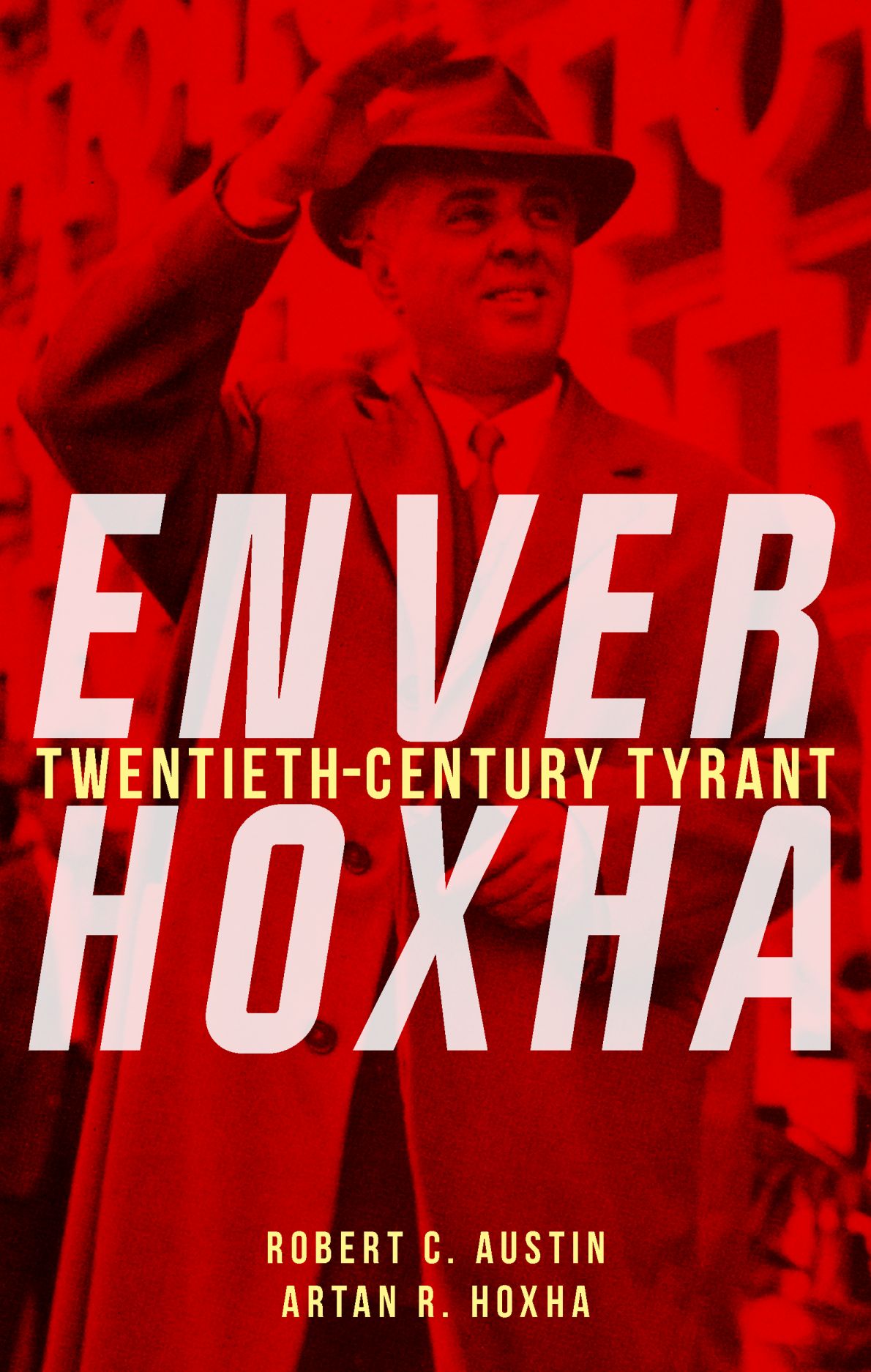
Published by: Reaktion Books
Readers of Robert C. Austin and Artan R. Hoxha’s Enver Hoxha: Twentieth-Century Tyrant will quickly appreciate that this Albanian dictator had a life worth writing about. His extraordinary experiences, canny single-mindedness, and sheer luck will certainly raise an eyebrow. Throughout this deeply engaging book, the authors, Austin (Professor at the University of Toronto) and Hoxha (historian of southeastern Europe), measure Enver Hoxha’s personal experiences against his political chess moves which made him the longest-serving dictator in the communist bloc. As the authors state, with a good degree of incredulity, “few politicians anywhere have played a weak hand so successfully” (p. 50). Indeed, born to a middle-class Muslim family in the southern Albanian town of Gjirokastër on 16 October 1908, Enver Hoxha was an entirely unremarkable outsider. Yet, by his death on 11 April 1985, he had become “the most important figure in Albania’s tragic twentieth century” (p. 11).
This is the second biography of Hoxha in English, after Blendi Fevziu’s Enver Hoxha: The Iron Fist of Albania (2016). Its focus on the leader’s geopolitical maneuvers constitutes a welcome addition to the literature on Albania’s unique twentieth-century history. Free: Coming of Age at the End of History (2021) by Lea Ypi, The Albanians: A Modern History (1995) by Miranda Vickers, and A Concise History of Albania (2022) by Bernd J. Fischer and Oliver Jens Schmitt provide personal and academic reflections on a country that sealed itself off from the world to such an extent that it is referred to as “the North Korea of Europe”. Austin and Hoxha’s biography is for both academics and the general reader. The authors combine academic analysis, historical context, and protagonist-driven storytelling to deliver an almost unbelievable product: an academic page-turner! It fizzes with surprising insights whilst grounding a fascinating narrative in well-researched historical facts.
This new book explores Hoxha’s life and legacy in six chapters with a Preface and an Epilogue. The first three chapters are largely contextual. Chapter 1, “Between Worlds”, provides context on Albania’s history and Hoxha’s youth. Its detailed yet precise introduction to how Ahmet Zog’s (Albania’s first and only king) rule led to Hoxha’s ascendency is highly engaging. This is no doubt due to Robert Austin’s recent biography of Zog, titled: Royal Fraud: The Story of Albania’s First and Last King (2024). Chapter 2, “On the Stage of History”, outlines Hoxha’s rise to power alongside the growth of the Democratic Front (which served as the primary political body for Albania’s Party of Labor, PLA). Chapter 3, “Surviving”, explains how Hoxha became Albania’s undisputed communist leader, in part by establishing a rivalry with Yugoslavia’s leader, Josip Broz Tito.
Hoxha morphs into a part-man, part-bull figure, obsessed with power and ravaged by ill-health.
The final three chapters expose Hoxha as an ailing yet powerful leader. Chapter 4, “Becoming Ahab”, paints him as Captain Ahab who, with the Albanians as his crew of the Pequod, “follow their captain to their deaths in his mission to kill Moby Dick, the white whale of capitalism and revisionism” (pp. 186–7). The chapter outlines how Hoxha, due to disagreements with Nikita Khruschev’s de-Stalinization, split its allegiance from the USSR and formed a closer economic bond with China. Chapter 5, “Antaeus”, depicts Hoxha as a man whose obsessive control led to widespread repression of culture, religion, women, even long hair! In Chapter 6, “The Minotaur”, Hoxha morphs into a part-man, part-bull figure, obsessed with power and ravaged by ill-health. Hoxha’s unfiltered isolationism and autocracy sees him execute his final solution where he breaks ties from all other countries (including China with whom he had been allied) and, suffering from physical ailments, embarks upon a killing spree, murdering those closest to him in a desperate attempt to hold onto control. As the authors write: “Like the creature from the ancient Greek myth, the more Hoxha aged, the hungrier for victims and human sacrifices he became” (p. 266).
Alongside extensive sociopolitical analysis and sharply focused contextualization of Albania’s early-twentieth-century history, Austin and Hoxha describe Enver Hoxha’s uncanny experiences before and during his rule. Readers gain insight into Hoxha’s “life as an exotic playboy” (p. 25) in Paris and general “penchant for coffee shops, nice clothes, gambling, and women” (p. 57). Hoxha’s heart attack and diabetes (worsened by his tendency to smoke fifty to sixty cigarettes per day) are also explained in detail. In fact, diabetes weakened his eyes to such an extent that his wife, Nexhmije, would often hear him “screaming in the night only to see signs of blood on the pillows” (p. 273)—a likely result of his capillaries exploding, causing excruciating hemorrhages.
The authors connect this illness to Hoxha’s personal vendettas and political actions. They argue that it transformed him into a hardened tyrant capable of imprisoning, ruining, and/or killing his family and friends (including Party officials who lived nearby in Tirana’s Blloku district and even the Prime Minister and his wife, Mehmet and Feiqrete Shehu). Poor health also made Hoxha accelerate the ratification of Albania’s new constitution of December 1976 which sanctioned his visions of Albania as “a fortress under siege” (p. 274). Under this constitution, religion, private ownership, and any cooperation with capitalist countries were banned outright. He also authorized the building of hundreds of thousands of mushroom-shaped bunkers across the country—symbols of his growing paranoia and introspective rule.
In an insightful section of the book, Austin and Hoxha explain that from the mid-1970s until his death in 1985 Enver Hoxha lived out the stereotype of a power-crazed but lonely autocrat with his partner-in-crime, Nexhmije. Austin and Hoxha’s astute observations on Nexhmije in the final two chapters help readers to see Enver Hoxha as a man who increasingly relied on his co-conspirator of tyranny, highlighting the mutual influence Mr. and Mrs. Hoxha had on each other. They state that she was “hardly a bystander” (p. 290) when her husband was at his most merciless. To explain Hoxha’s behavior, the authors cite sociologist Erving Goffman, who suggests that power and loneliness are commonly connected traits (see p. 218).
Decades after the collapse of Albania’s “Granite Wall” (as Hoxha himself called it), the authors explain that Albanians are still scrambling to find the whereabouts of executed and missing family members.
One of the authors’ most valuable contributions is their theoretical reading of Albania’s communist past and post-communist present, which offers an alternative to Francis Fukuyama’s notion of “the end of history”. In their belief that “[h]istory continues to be made” (p. 18), Austin and Hoxha state that liberal democracy and a market economy are not the only drivers that promote change, giving the example of Enver Hoxha’s ideological dictatorship of Albania which saw, and still sees, the country and its people struggle for freedoms, rights, and opportunities. As they caution in the Epilogue, positive change taking root requires “the survival of the liberal order, which is today under wholescale attack from a rising authoritarianism” (p. 305). Decades after the collapse of Albania’s “Granite Wall” (as Hoxha himself called it, see p. 301), the authors explain that Albanians are still scrambling to find the whereabouts of executed and missing family members. This encourages the reader to weigh up Hoxha’s legacy in terms of the country’s economic development and attempts at transitional justice.
Upon finishing Enver Hoxha, readers will have a more rounded understanding of Cold War history, specifically regarding the ways in which Khrushchev’s labor and economic policies diluted national parochialism across Eastern Europe, but not in Albania. The authors explain how, during the late 1950s and early 1960s, Khruschev redefined relationships between Moscow as the USSR’s center of power and the satellite states at the fringes of its territorial control. Throughout the book they also set up a contrast between Hungary’s brand of ‘goulash communism’ and the prioritization of Marxist-Leninist ideological purity in Albania, outlining ten differences between János Kádár’s and Hoxha’s approaches. This helps to make it irrefutably clear that, by the mid-1970s, Hoxha had “transitioned to a more pronounced autochthonism” (p. 199). Readers discover that this brand of nationalist communism and autarchic anti-imperialism was based on isolationist politics, upheld by an unwavering belief in Stalinism, reinforced by a Cultural Revolution that strengthened the PLA’s control of society, and maintained by strict censorship measures carried out by the Sigurimi, the State Security.
To end on a personal note, this year my family book club is reading a biography each month. August will be my turn to choose a noteworthy person for us to discuss. For readers of this review, it may come as no surprise that I will be suggesting this very fine book on Enver Hoxha.
Lucy Jeffery is co-editor and author of Replaying Communism: Trauma and Nostalgia in European Cultural Production, published by CEU Press and AUP in 2026. She is also co-founder of the Replaying Communism project, which received funding from the AHRC SWW-DTP (2023) and the Visegrad Fund (2024). Lucy’s published research is on Samuel Beckett, Harold Pinter, Ezra Pound, Ingeborg Bachmann, and Magda Szabó. Her monograph—Transdisciplinary Beckett: Visual Arts, Music, and the Creative Process—was published by Ibidem in 2021, and, in 2022, she co-edited a special issue for Green Letters, entitled ‘A New Poetics of Space’. Lucy continues to publish on twentieth-century culture and is a frequent contributor to the CEU Review of Books. She is currently the manager of several libraries in Swansea.