

Narratives of imprisonment from Stalin to Putin
Published by: Bloomsbury Academic
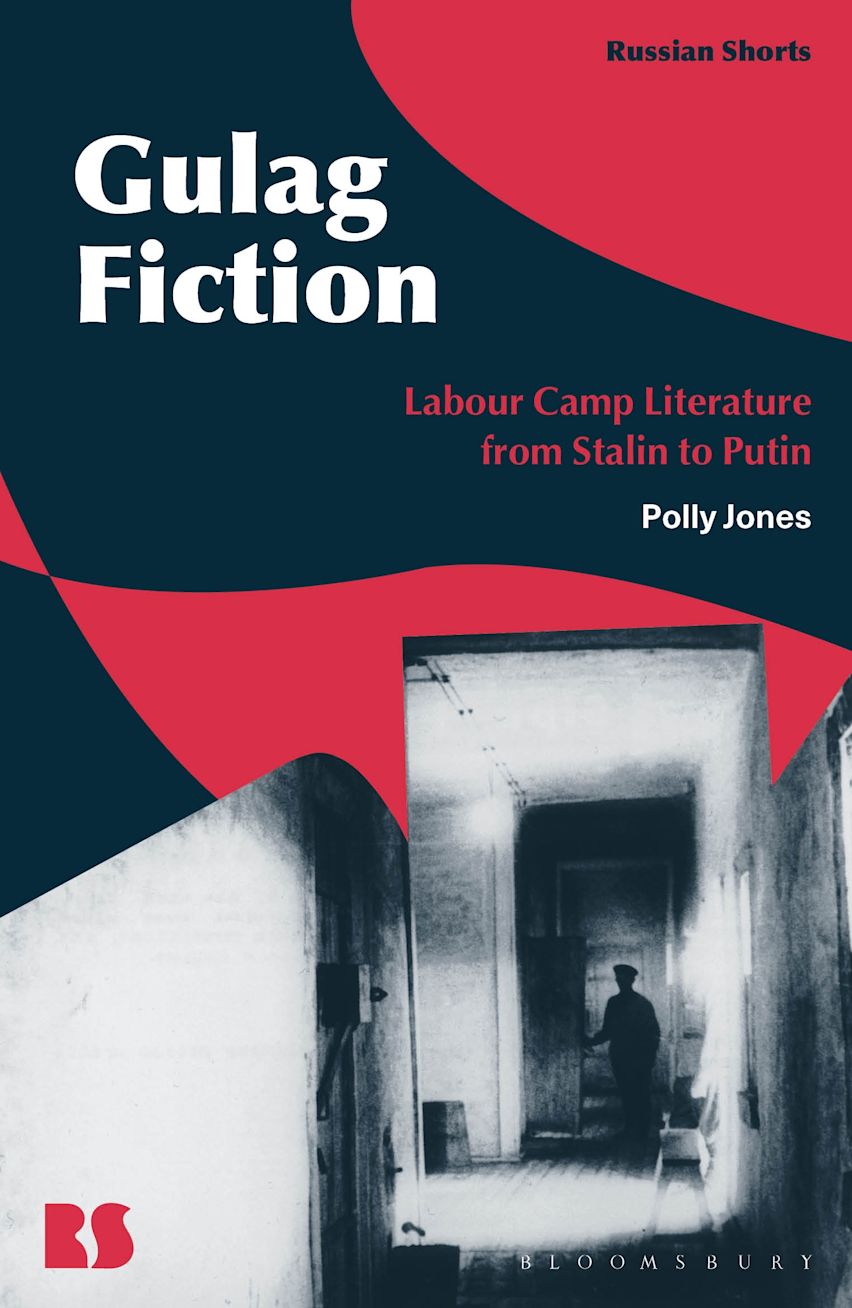
In Gulag Fiction: Labour Camp Literature from Stalin to Putin, Polly Jones, Professor of Russian at the University of Oxford, provides a survey of the Russian prose dedicated to expressing the experiences, traumas, and memories of life in penal institutions across the former Soviet territory. It draws on thirty-seven Soviet, samizdat, and post-Soviet literary works to expose the key themes, motives, and repercussions of this literature then and now. Predictably, Jones opens with a discussion of One Day in the Life of Ivan Denisovich by the most well-known Gulag author: Aleksandr Solzhenitsyn. It is likely that readers of Gulag Fiction (myself included), along with the book’s author, first encountered gulag literature through One Day in the Life, perhaps then moving on to Solzhenitsyn’s larger novels before turning to his contemporary Varlam Shalamov and his Kolyma campmate Georgii Demidov. It is entirely logical, therefore, that Jones introduces her readers to the key tropes of the genre through a familiar name and novella.
As an introduction to gulag literature more broadly, this slim volume (it belongs to the Russian Shorts series published by Bloomsbury) works well, covering the following key questions as listed on page 3: “what was the essence of the Gulag? Did it demand new literary forms? Could it adapt existing prison literature traditions?” Pleasingly, Jones also considers the plight of the authors of this fiction as well as the writing and reception of works by contemporary novelists. Though rooted in the experience of current generations’ (grand)parents, this growing body of contemporary literature finds renewed relevance amidst what Jones calls “a sharp re-Stalinization of memory politics and censorship, and a growing number of contemporary political prisoners” (pp. 108–9) in the Putin era.
Before exploring the contemporary appeal and expansion of gulag literature, Jones contextualizes the genre. She explains how Dostoevsky, in his psychological and ethical exploration of his time in Tsarist hard labor prisons, is a founding father of this literary form. Jones reinforces the widely held view that Dostoevsky’s 1862 series of sketches titled Notes from the House of the Dead was fundamental to the formation of this labor camp genre, specifically to the works that prioritize spiritual growth through suffering and encounters with ordinary people. She also provides valuable insights into perpetrators and those complicit in the imprisonment of citizens.
Jones’s inclusion of contemporary gulag literature in Gulag Fiction forms the book’s most original contribution to the intersecting fields of Russian literary studies, trauma studies, prisoner of war literary studies, and, as we will see, nostalgia studies.
On her university profile page, Jones begins her research profile by stating that the key question she is interested in “is how citizens of authoritarian regimes, especially writers and other cultural practitioners, find ways to express themselves, by navigating or evading censorship and other political controls.” This invites us to consider the parallels between the Soviet era and today. Hence, Jones’s inclusion of contemporary gulag literature in Gulag Fiction forms the book’s most original contribution to the intersecting fields of Russian literary studies, trauma studies, prisoner of war literary studies, and, as we will see, nostalgia studies. In particular, her attention to how Guzel’ Yakhina, Viktor Remizov, and Zakhar Prilepin have “opened up new or controversial possibilities for Gulag literature, by confronting traumatic and nostalgic Soviet memories” (p. 5, then explored in more detail in Chapter 3) forms one of Gulag Fiction’s most relevant insights that aids our understanding of what themes of psychological liberation, love, and spiritual transcendence suggest about attitudes towards the past and the politics of the present. It begs the question of how literature from or about a network of penal institutions associated with extremely harsh working conditions, made worse by scarce resources, frequent punishment, and freezing temperatures, can elicit nostalgia. Yet, in contemporary cultural production a feeling of nostalgia (either misplaced or genuine) is often wrapped up in a predominantly traumatic memory—Sergei Lebedev’s The Lady of the Mine (2025) constitutes one relevant example. Other examples abound across cultural production from the former Eastern bloc. Indeed, this complex admixture of trauma and nostalgia in the region comprises the central line of enquiry in the edited collection Replaying Communism: Trauma and Nostalgia in European Cultural Production (CEU Press, 2025) edited by myself and Anna Váradi. In fact, one chapter deals with this trauma/nostalgia tension in relation to the establishment of a museum to commemorate Bulgaria’s “Belene” forced labor camp.
At times, Jones hints at other interesting ideas, but, no doubt due to restrictions of the Russian Shorts series (40,000 words), she could not dive in. For example, with a chapter titled “Memory and post-memory of the Gulag”, one may expect to find a sustained engagement with Marianne Hirsch’s notion of postmemory, but the theory (formed in the context of German literature and art about the Holocaust) is only briefly introduced on page 98. Readers may here find a fuller explanation, albeit in a footnote, useful for appreciating Jones’s analysis of Evgenii Vodolazkin’s Aviator (2016), and Lebedev’s Limit of Forgetting (2011). Hirsch suggests that with the advantage of greater temporal distance, the postmemory witness may be better equipped to develop new forms of expression and creative reinterpretations of the traumas experienced by their predecessors. Even such a simple explanation of postmemory would clarify the role of literature and the creative imagination with regards to Jones’s conclusive comments such as: “Gulag trauma is peripheral and deeply buried in the national landscape and collective psyche, so its excavation demands effort and empathy, but this memory work is essential for Russia to move forward” (p. 107).
At other times, Jones’s writing does not fully deliver, with a few too many ill-conceived phrases and typos to ignore. Illustrative examples can be found on pages 25, 79, and 81. At £12.99, however, this remains a reasonably priced introduction to Russian literary prose about the Soviet labor camp network. Readers will find Jones’s contextualization of the genre helpful and some of the slightly lesser-known fiction covered of interest. But anyone looking for a more sustained exploration of the main themes belonging to the genre and questions pertaining to humanity/dehumanization stemming from its diverse literature may find some of the works that Jones lists on the “Further reading” page of the book (p. 147) more insightful and rewarding. To pick up on postmemory, readers unfamiliar with this concept may find it very useful to consult Hirsch’s The Generation of Postmemory: Writing and Visual Culture after the Holocaust (Columbia University Press, 2012), mentioned in this list, before reading Jones’s final chapter. My own recommendation, not included in Jones’s “Further reading,” would be The Gulag Writings of Aleksandr Solzhenitsyn and Varlam Shalamov edited by Fabian Heffermehl and Irina Karlsohn (Brill, 2021), which includes a chapter by the late Michael Nicholson, to whom Jones dedicates her book.
For the Russian Shorts series to catch on with the “broad range of readers” it seeks to attract, a page or two contextualizing Jones’s book within both the series’ back catalogue and forthcoming titles would be extremely useful. For example, parallels could be highlighted between Gulag Fiction and The Soviet Gulag (Jeffrey S. Hardy), Why We (Still) Need Russian Literature (Angela Brintlinger), Soviet Internment: Memory, Nostalgia, and the POW Experience (Maria Christina Galmarini), and Russian Culture under Putin (Eliot Borenstein). Hopefully, in mentioning these other Russian Shorts here, I can draw attention to the thematic crossovers within this series and its value for those beginning their academic quest to uncover the “key concepts, personalities and moments in Russian historical and cultural studies” (front matter).
In a podcast about this book for New Books Network, Jones tells her interviewer, Polina Popova, that she hopes it “gives people leads to follow”. In this endeavor, Jones is successful as she brings gulag fiction into dialogue with a range of literature, contemporary cultural practices (such as the human rights organization Memorial), and political debates. Overall, Gulag Fiction reinforces how and why the Soviet network of forced labor camps should be remembered. It reminds readers that Russia’s shifting relationship with its gulag past carries significance for the historicization of the first wave of authors who documented prison camp atrocities as well as for the writers who have followed and for those yet to come.
Lucy Jeffery is Co-Founder of the “Replaying Communism” research project which received AHRC funding in 2023. She has published widely on twentieth-century literature, theatre, and culture. Her monograph, Transdisciplinary Beckett: Visual Arts, Music, and the Creative Process was published in 2021, and she co-edited the “A New Poetics of Space” special issue of Green Letters in 2022. She has also published research on the political context of the mid-twentieth century faced by authors such as Magda Szabó. In 2024 she won the Visegrad Fellowship. Her recent work also includes the co-edited collection: Replaying Communism: Trauma and Nostalgia in European Cultural Production.