

Ottoman Greece from a study in Tübingen
Published by: Harvard University Press
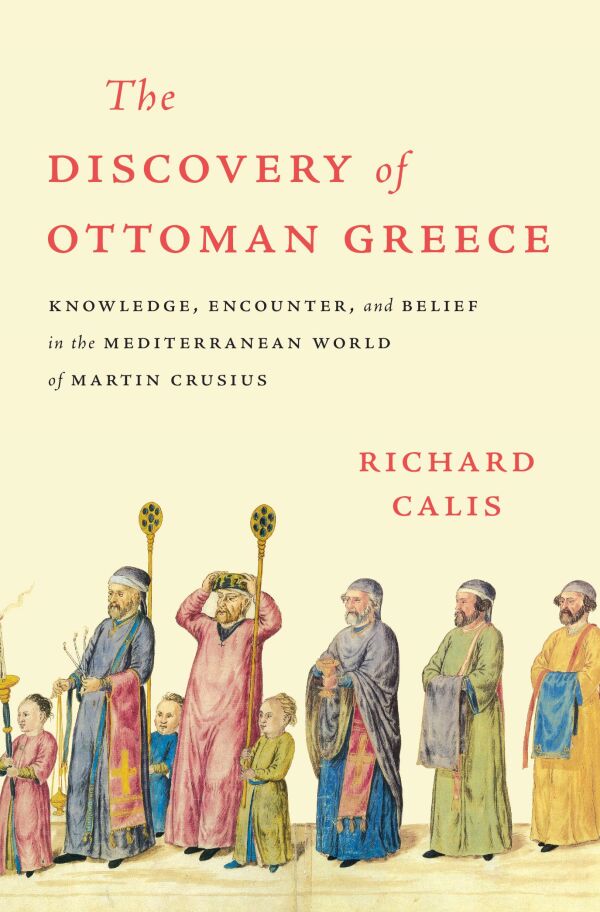
The Discovery of Ottoman Greece is an ethnographic history about a historical ethnographer. With this book, the historian Richard Calis has published an informed portrayal of the early modern scholar Martin Crusius, who lived in Southern Germany yet dedicated his life to the better understanding of Greek history, religion, language, and culture. Calis discovered the personal papers of the well-known intellectual in the archives of the University of Tübingen. As becomes clear throughout the book, this collection constitutes a true treasure trove. Not only does it contain personal documents, but also countless notes and intimate comments on political and religious debates. While any historian would be thrilled to unearth such sources, it still takes talent and skill to turn these papers into a coherent narrative. Understanding Crusius not merely as a vessel of ideas but as an individual grounded in his time, Calis successfully contextualizes his writings at the crossroads between Lutheranism, Mediterranean politics, and the emerging field of ethnography. The Discovery of Ottoman Greece, I would argue, substantially contributes to the methodological development of intellectual history, to a broader definition of the Mediterranean, and to a better understanding of the Philhellenic tradition.
While Calis is interested in Crusius’ ideas, he is more concerned with the intellectual, social, and sensorial context of their creation. Analyzing the latter’s private notes and glosses enabled him to uncover some of the cognitive processes behind his conclusions. Calis apprehends ethnographic paradigms not as solid or rigid tenets set in stone but as mutable perceptions of foreign customs, dependent on scholars’ ever-changing personal environment. Despite being the protagonist, Crusius is not presented as an individual genius ahead of his time. Rather, Calis depicts him, albeit acknowledging the German’s unrelenting work and immense productivity, as one of many people who contributed to the composition of his books. Byzantine refugees, Lutheran diplomats, and other researchers influenced the formation of his ideas and assumptions. Scientific output appears not as the Herculean feat of a single man but as the product of myriad interactions within a global social network.
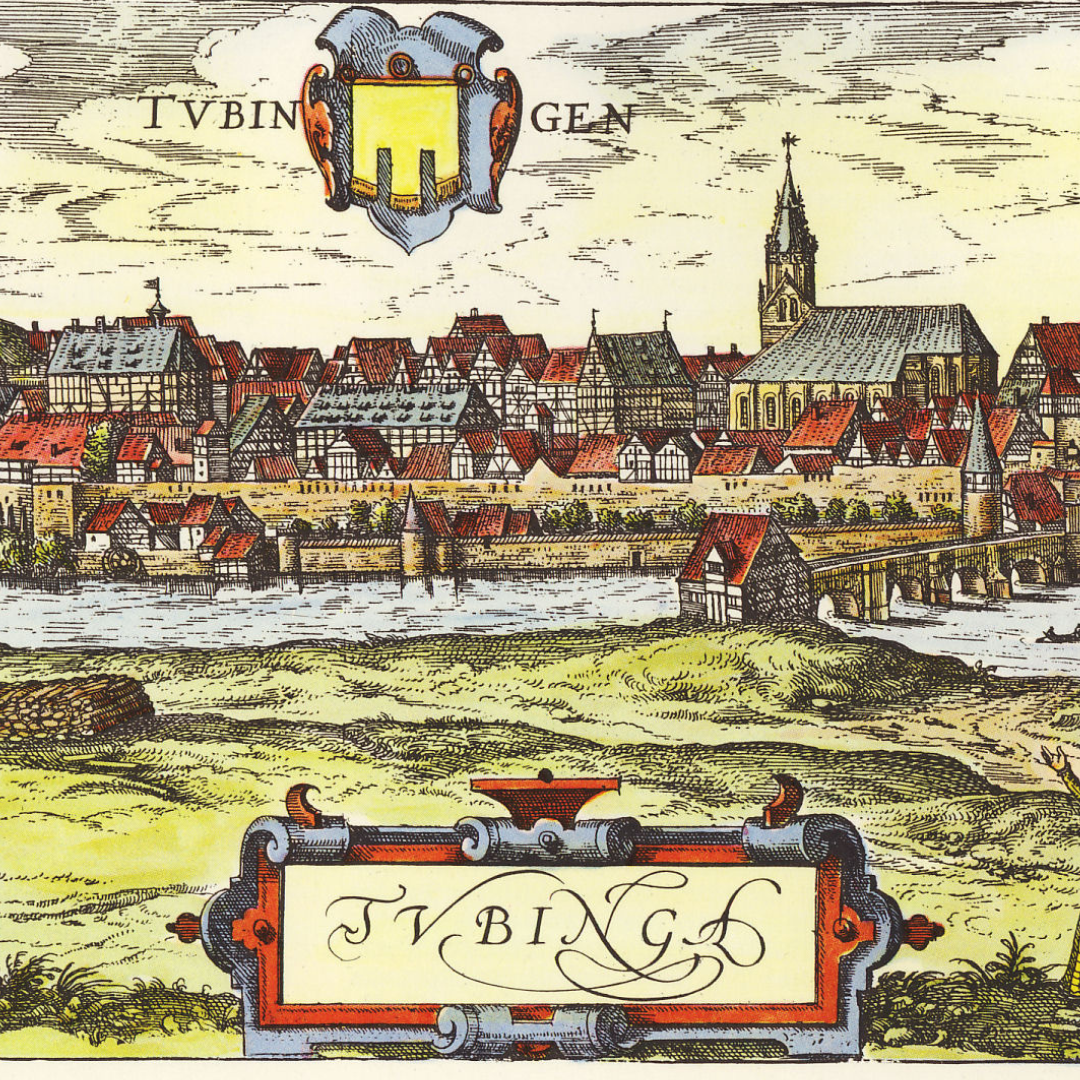
The description of Crusius’ household especially demonstrates his dependency on others. It is here, in the two middle chapters of The Discovery of Ottoman Greece, that the reading is most engaging. Calis relates how, without his wives, family, students, and foreign visitors, the German scholar’s books would not have been the same. By focusing on the ethnographer’s household, city of residence, and workspace, the historian, furthermore, turns Crusius’ intellectual journey from a mere cognitive and social to a sensorial experience. Refreshingly, the visual, musical, and material aspects of academic life in Tübingen constitute a large part of The Discovery of Ottoman Greece. Instead of denigrating Crusius as an armchair ethnographer, Calis aims to comprehend the world of an early modern man obsessed with faraway Greece. At the book’s end, the readers will believe they smell, hear, and see how Greek history and ethnography were written in sixteenth-century Germany.
While Crusius eagerly studied the Greek language, family businesses, such as those of the Fugger or Welser clans, built a capitalist network stretching across the region, including Ottoman Greece.
Calis successfully demonstrates that while Swabia and Bavaria are usually perceived as non-Mediterranean provinces, their cultural, religious, and political history should also be researched within the framework of Mediterranean Studies. Vice versa, scholars writing about the basin ought not to ignore the effect these adjacent territories had on its development. By referring to Peregrine Horden and Nicholas Purcell’s term of the Mediterranean’s “extended hinterlands”, the historian redefines Southern Germany as a liminal part of the region. This inclusion is not only fruitful but long overdue. If one peruses the long list of Swabian and Bavarian scholars who engaged with Spain, Italy, and Greece and welcomed representatives of these regions throughout the early modern era, one recognizes the validity of this intellectual affiliation. Moreover, by introducing the term “Global Lutheranism”, Calis pinpoints the interrelatedness of Crusius’ fascination for Greece and religious polemics in the region. The early modern scholar wrote in a time of denominational turbulency when representatives of Catholic, Lutheran, and Orthodox Christianity sought to negotiate the relationship between their opposing denominations. In Calis’ book, it becomes clear how Lutheran scholars like Crusius strove to win the Orthodox Patriarchate as an ally against the Roman Church and, perhaps, even to incorporate its sphere of power into their own through conversion. Emerging Philhellenism developed in relation to these religious, political, and – as Calis is able to show – imperial contemplations.
A further facet of Southern Germany’s intersectional connection to the Mediterranean was its economy. While Crusius eagerly studied the Greek language, family businesses, such as those of the Fugger or Welser clans, built a capitalist network stretching across the region, including Ottoman Greece. This economic aspect and its entanglement with concurrent intellectual trends could be the subject of future research in the field.
The Discovery of Ottoman Greece’s role as a revolutionary addition to studies on Philhellenism, the love of Greek language and culture, stands out among its other accomplishments. It is telling that when an anthology was published in 2021 about the Concepts and Functions of Philhellenism it contained one section on Ancient Roman writers and then abruptly jumped to the nineteenth century. Early modernity, despite its importance for the Philhellenic tradition, is seldom scrutinized in this context. This trend is peculiar since sixteenth-century German intellectuals, such as Crusius and Hieronymus Wolf, laid the foundation for many narratives and ideas about (Ottoman) Greece that still blossom today. The author convincingly demonstrates how the concept of Greek degeneration in modernity, now mostly accessed through the writings of Edward Gibbon and Lord Byron, was already stock material in Crusius’ widely circulated books. Calis set out to close this lacuna, and while there is still much to be done, his is evidently an excellent step in the right direction and a pioneering work to be followed.
Paul Csillag is a historian of the Mediterranean world with a particular focus on imperial actors and transregional mobility. He studied at the Universities of Innsbruck, Toulouse, and Yeditepe, and completed his Ph.D. at the European University Institute in 2024. His teaching career has taken him to Florence, Innsbruck, Regensburg, Salzburg, Sciences Po, and Monash University. He recently coordinated the Austrian Studies Doctoral College and the Justman Project at the University of Innsbruck. His current research, conducted at the South Tyrolean Mining Museum, traces the global trajectories of Tyrolean miners who migrated to the Mediterranean and beyond during the early modern period.