

Rethinking refugeedom in East Central Europe
Published by: CEU Press
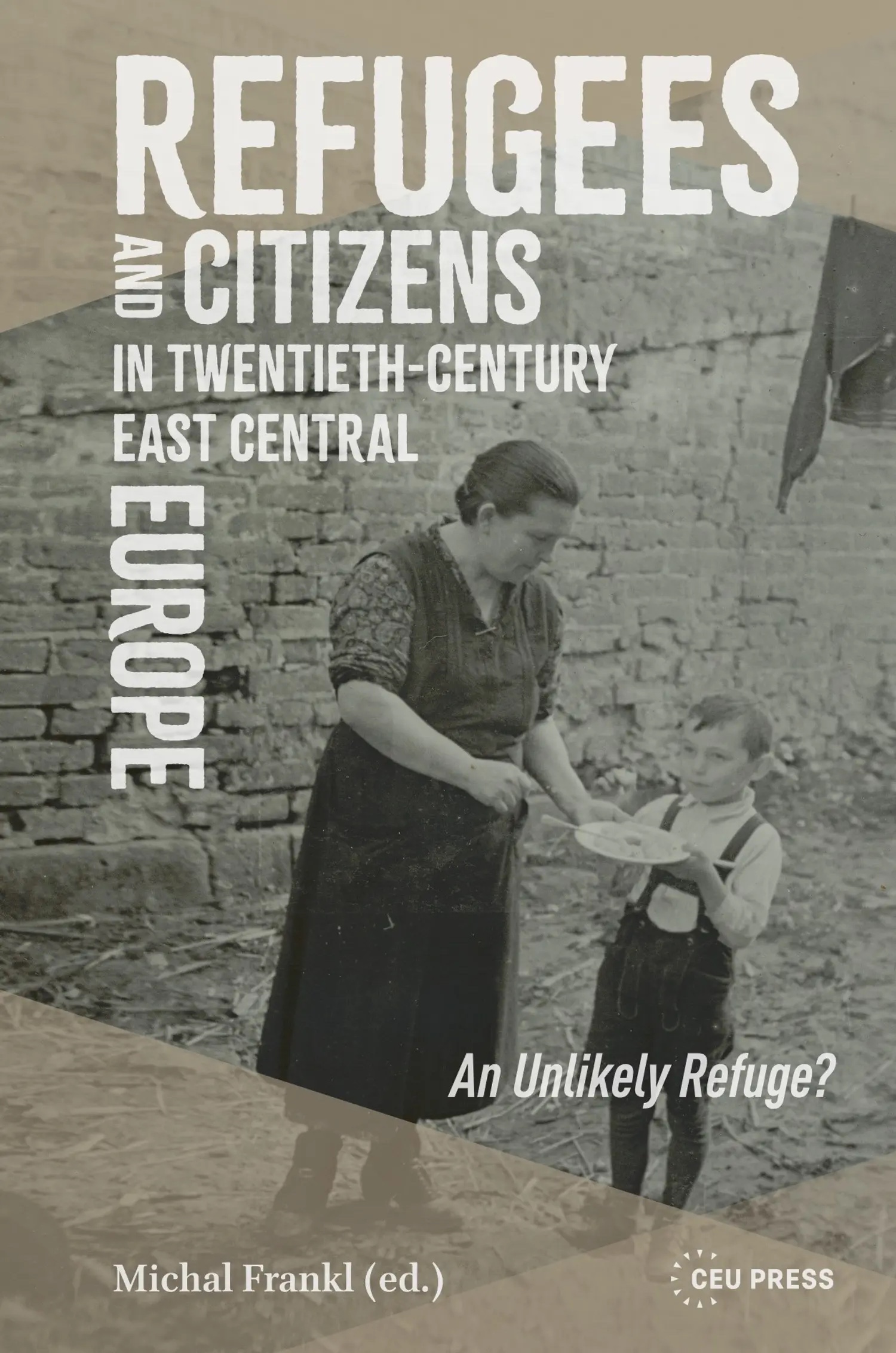
East-Central Europe has long been perceived and portrayed as an unlikely place of refuge for people on the move during the 20th century. The book edited by Michal Frank shows that East-Central European countries were not refugee-producing places but, rather, during the 20th century they developed their own strategies and categories in connection to refugeedom.
The book Refugees and Citizens in Twentieth-Century East Central Europe is the research output of the ERC project Unlikely Refuge? Refugees and Citizens in East-Central Europe in the 20th Century, funded by the European Union’s Horizon 2020 research and innovation program. In a move away from the long-lasting Cold War opposition between the “free democratic West” that welcomes refugees versus the “totalitarian refugee-producing East” (p. 15), the eight essays dismantle this binary vision of refugee assistance and management.
The questions “who is a refugee?” and “what does that entail?” in East-Central Europe do not have a linear and straightforward answer. Not only the state and its institutions, but also local and international actors and refugees themselves negotiated over the status of refugees and refugee aid. East Central European countries during the 20thcentury developed forms of asylum practices during periods of transformation which allowed refugees to have room for negotiation according to changing domestic and international developments.
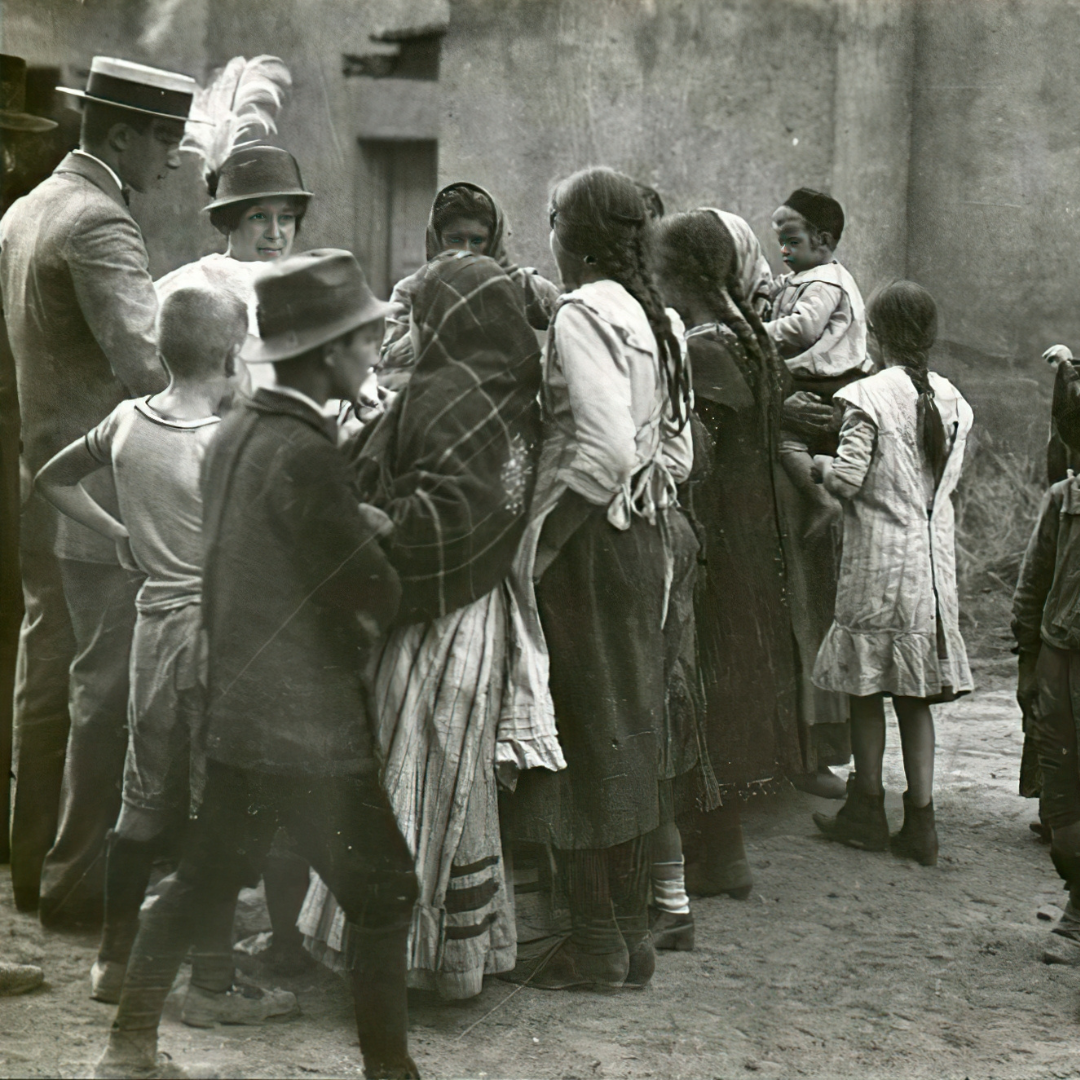
Doina Anca Cretu explores the ecosystem of humanitarian aid during the First World War Habsburg Empire. Her chapter provides a picture of the Jewish refugee camps that breaks away from the binary narrative of exclusion versus inclusion. Rather, Cretu argues that the camps existed and functioned at the intersection of inclusion, exclusion, control, and assistance. The author finds that the limited ability of the state to aid refugees opened up space for Jewish philanthropic organizations (national and international) to step in (p. 42). Cretu shows how Jewish refugee management in Habsburg First World War refugee camps was shaped by the entanglement of public and private institutions, thus pointing to the complexity and layered construction of refugee management.
Borderlands emerge as a space of ongoing negotiation in Francesca Rolandi’s chapter. The cities of Sušak and Fiume/Rijeka during the interwar period became not only places of transit but also of refuge for the political refugees from either Fascist Italy or the Kingdom of Yugoslavia. Anti-Fascist refugees were hosted in Sušak, while Utaša supporters were hosted in Fiume/Rijeka. Rolandi shows how the personal agency of the refugees increased during confrontational moments between the two regimes, when the political capital of the refugees increased pressure on the border area. Consequently, during moments of appeasement and cooperation, the personal leverage of the refugees decreased, and their residence at the border became inconvenient (p. 75). Rolandi moves from the porosity of the border to expand our understanding of cities not only as of places of transit but also as a haven of transnational networks, built through the personal agency of the refugees.
These interrupted lives informed their perception of their “new lives” and returned as a “prosthetic memory”, a past not lived but worn
The study of temporalities is central in the chapters of both Lidia Zessin-Jurek and Karla Koutková. Through written testimonies of Polish Jews who had been displaced by the Nazi and Soviet invasion of Poland, Zessin-Jurek discusses how temporal frameworks change and are disrupted as well as the signs left by this disruption in the life of the survivors. Jewish refugees experienced the collapse of state time and lived almost day by day, which impacted on their perception of the future. As they fled Poland, Jewish refugees put many things on hold, which they never resumed again in their life after the Holocaust. These interrupted lives informed their perception of their “new lives” and returned as a “prosthetic memory”, a past not lived but worn (p. 106).
Life before and after armed conflicts was an overarching theme in the interviews Koutková conducted with Bosnian refugees. The notion of temporary asylum was implemented in the 1990s with the idea that Bosnian refugees would return to their country once the war was over (p. 209), but return was never easy in terms of practical and identity challenges. By exploring the collision of personal and state temporalities, Koutková shows how Bosnian refugees navigated challenges in Czechoslovakia and later Czech Republic. The hope to return to normalcy and administrative waiting times (chronopolitics) pervade the lives of the interviewees, while the self-identification as “refugees” was not the same for everyone. Questions of identity, citizenship, and belonging emerge as fundamental aspects of the post-war life of the Bosnian interviewees.
Julia Reinke connects food history with the history of childhood support practices in Socialist Poland and East Germany. Visibly traumatized young refugees arrived in Poland and East Germany in 1948 from civil war-torn Greece. Both countries treated them as “high ranking” refugees, but nevertheless struggled with the “stomach question”, that is: how to feed the children. Food emerges not only as a matter of biological nutrition, but also as a sign of the carrier’s trauma and a signifier for approaches to “otherness” in the host societies. While in East Germany the topic was approached from a “national culturalism” point of view (p. 171), in the Polish “recovered territories” the question was approached in a more pragmatic manner.
Socialist Czechoslovakia is offered as an example of asylum practices in the Eastern Bloc. Nikola Thoma explains how political asylum in the 1950s was the result of both formal and informal practices rather than legal criteria. Asylum practices depended on political evaluations and security concerns, in a context that focused more on refugees’ ideological affinity rather than on their individual contributions to the host society (p. 139). The category of political refugeedom was flexible, and relied on embassies, international networks, and security background checks. While refugees relied on personal networks to secure their position, changing domestic situations shaped their status and perception. Thoma shows how political criteria played a far greater role than legal and administrative practices.
Austria was deemed a “refugee haven” for escapees from the Eastern Bloc, regardless of their motivation. Maximilian Graf’s essay on Cold War Austria shows how this assumption was actually a myth rather than a reality. The economic crisis and the growing bilateral relations during the Détente resulted in a shift in the perception of refugees from the Eastern bloc in the 1970s and 1980s, from political to economic refugees to competitors for jobs and accommodation. Constant appeals to international support in the management of the refugees in connection with concerns over the “limited absorption capacity” (p. 193) characterized the Austrian approach to refugee management. By bringing labor history into the discussion of refugee management, Graf adds much-needed levels of complexity to the analysis of Austria’s refugee policy.
It reshapes the perception of East-Central Europe into a region that developed original approaches to asylum and refugee assistance, different from Western practices but deserving the same attention.
How do the concepts around “Refugeedom” change over time? Ágnes Katalin Kelemen explores these changes in the Hungarian language in a study of encyclopedia and lexica. Through the many political transformations of the 20thcentury, the concept of refugee remained intertwined with the notion of citizenship and held no negative connotation before the growing concerns over economic migrants (migráns) in recent times. These specific terms emerged in opposition to refugees (menekült): the need for a neologism lies in the absence of negative connotation (p. 249). Anti-refugee communication needed a new word to express skepticism over the people entering the country.
By addressing multiple issues connected to asylum policies and refugeedom during the Habsburg and interwar period, during the Second World War and the Cold War, and up until present time, this book advances the discussion over refugee management in Central Eastern Europe. It reshapes the perception of East-Central Europe into a region that developed original approaches to asylum and refugee assistance, different from Western practices but deserving the same attention. The unlikely refuge is rather a place in which asylum practices are implemented, negotiated, and put into practice during the 20th century.
Georgette Ferreira was imprisoned in Portugal as a communist, and she was offered asylum in Czechoslovakia in 1959 thanks to the joint efforts of the Czechoslovak Red Cross and the Women’s Union. Cases like this show how asylum in Central Europe relied on personal and professional commonalities, that mobilized different parts of society in favor of the refugees (p. 131). In Habsburg Austria state and non-state actors cooperated due to contingency issues to aid the Jewish refugees. Emergency relief shaped charitable aid in a local-national-international context that proved the relevance of philanthropic societies in the management of the refugees in Central Europe (p. 45). The case of the Bosnian refugees in the nineties in Czechoslovakia and later Czech Republic shows how personal efforts and institutional acknowledgement can turn a temporary refuge into a form of homemaking, stability, and comfort (p. 227). Central Eastern European history offers us examples of multi-actors and negotiated asylum practices, while nowadays some approaches to refugee management seem to strive for unilateral and non-negotiable practices. This volume puts Central Eastern European refugee management and protection back on the map and reminds us that there is much to say about them.
Emma Dal Mas is a Ph.D. student in History at the European University Institute. She investigates the resettlement of the “Volksdeutsche” refugees in Austria after 1945. Her research focuses on naturalization policies and on the role of religious organizations from the humanitarian perspective. She is currently a Guest Researcher at the Ludwig Boltzmann Institute für Kriegsfolgenforschung in Vienna/Graz and at the Research Center for Transformation at the University of Vienna. In 2024 she was a research assistant at the University of Udine.