

Socialist modernities and South-South internationalism
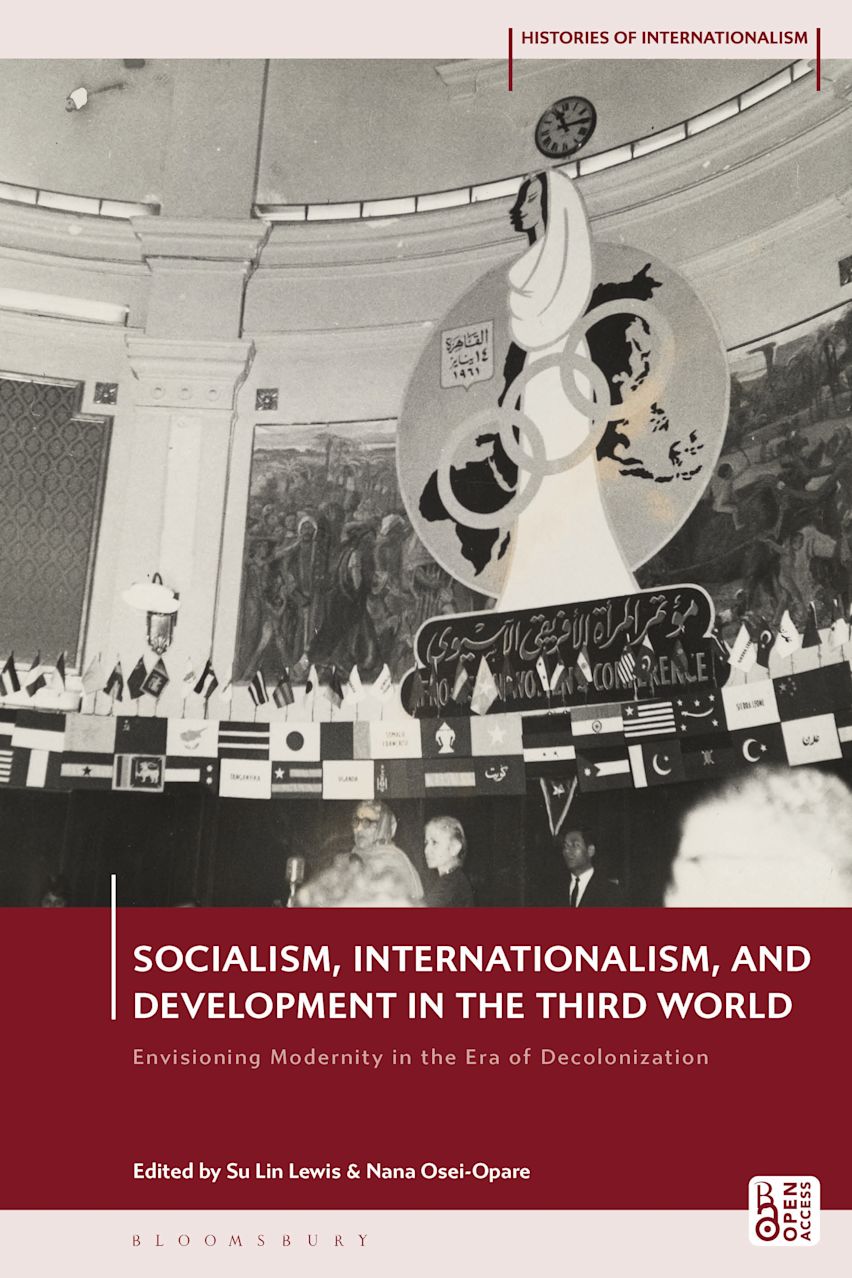
Published by: Bloomsbury
What did socialism mean to the people of the decolonizing Third World? What did they hope it could build? These are the fundamental questions behind this rich, wide-ranging edited volume from Su Lin Lewis and Nana Osei-Opare. The book brings together 13 vibrant scholarly essays to problematize and reframe decolonization and the history of development and internationalism. It does so through the lens of Third World socialist thoughts and practices, which offer their own variations rather than simply adopting the Maoist-Soviet model or reflecting a Cold War phenomenon. The book treats these varied approaches as a living set of ideas. These ideas were generated, debated, and implemented by actors across Africa, Asia, and Latin America.
The volume’s core intervention is historiographical. These 13 essays explore the competing visions of socialism and internationalism in the Third World. Lewis and Osei-Opare highlight that the historiography of development is usually written from an Anglo-European standpoint. Thus, in most accounts, postcolonial states are portrayed as passive recipients of aid. There are some attempts to revise this Western development discourse, although these tend to treat postcolonial actors as mere parts of the developmental story, reflecting an inherent lack of perspective that fails to explicitly focus on the Global South. This collection of essays challenges that view: the editors argue that, for many leaders and inhabitants, development dreams were also “socialist or freedom dreams” (p. 2). Socialism and development were inseparable for decolonizing states as they offered a collective vision of a developed society which was often a socialist one. The collection also rejects the idea that developmental projects and ideas were uniform or linear. Instead, tensions are the central threads that show how socialism, internationalism, and development are contentious ideas when seen from multiple perspectives ranging from anticolonial intellectuals to everyday people shaping post-colonial states. As shown in the book, these tensions also point to the complex legacies of colonialism that Third World development and internationalism could not escape. The editors and the contributors explore these threads to recover the texture, plurality, and internal tensions of those dreams and visions.
The book’s spatial and temporal reach is impressive in its breadth and coherence. The essays move from Buenos Aires in the 1920s through Cold War Asia of the 1940s and 50s, late 1960s Tanzania, and 1970s Cuba, extending further to the Republic of China (Taiwan), Indonesia, Ghana, India, and the transnational spaces of Afro-Asian women’s conferences. This geographical breadth underscores the editors’ central argument: that socialism was never a single doctrine but manifested in distinct forms, repertoires, and projects shaped by each state’s particular society and political-economic context.
As with any major ideology, people agreed and disagreed about what socialism should mean in practice, and the book makes clear that this very contestation was part of its vitality
Several essays in this edited volume are especially notable for their original perspectives on socialism and development in the Third World. They also highlight how solidarity, internationalism, and mutual help among these countries became important tools for decolonization, growth, and freedom from the Global North (p. 6). The sheer variety and unpredictability of socialist ideas are a major theme. Many chapters point out that there was no single Third World socialism—ideas were always shifting, challenged, and taking new forms. For example, Tehyun Ma questions Cold War divisions by showing a flexible form of socialism in Taiwan, grounded in Sun Yat-Sen’s Three Principles and in land reform/social insurance in the 1940s–1950s (p. 81). This created a unique type of state-led socialist development, complicating relations between Taiwan and the United States. Matthew Shutzer examines Indian socialism, showing that its approach to development combines at least three ideas, thereby demonstrating that socialism is not a fixed ideology (p. 99). While Pradipto Niwandhono examines the Indonesian Socialist Party (PSI), revealing that Fabian and democratic socialist ideas (p. 123) shaped Indonesian thinkers, who often challenged the notion that Asian socialism followed only Soviet or Maoist models (p. 117–18).
Another striking theme of the volume is its refusal to homogenize Third World socialism. As with any major ideology, people agreed and disagreed about what socialism should mean in practice, and the book makes clear that this very contestation was part of its vitality — socialism could be, and was, so many different things. Several chapters show how postcolonial actors repeated some of the social and racial hierarchies they criticized. For instance, Joanna Crow examines how Latin America’s communist left reproduced racial hierarchies in Buenos Aires. The Comintern’s Humbert-Droz stressed class analysis over racial and indigenous issues, which downplayed Latin American delegates’ accounts of how race and indigeneity affected exploitation (p. 40). Berthold Unfried and Claudia Martines show that Cuban advisors in Angola sometimes described Angolans’ main problems as “cultural backwardness, technical ignorance, illiteracy” (p. 144), using language similar to colonial attitudes. Unequal power remained. Osei-Opare’s analysis of fisheries communities also shows how language kept colonial ideas alive, describing the use of terms such as “ignorance as disease” to justify taking land from fishing communities while failing to help local economies (p. 223).
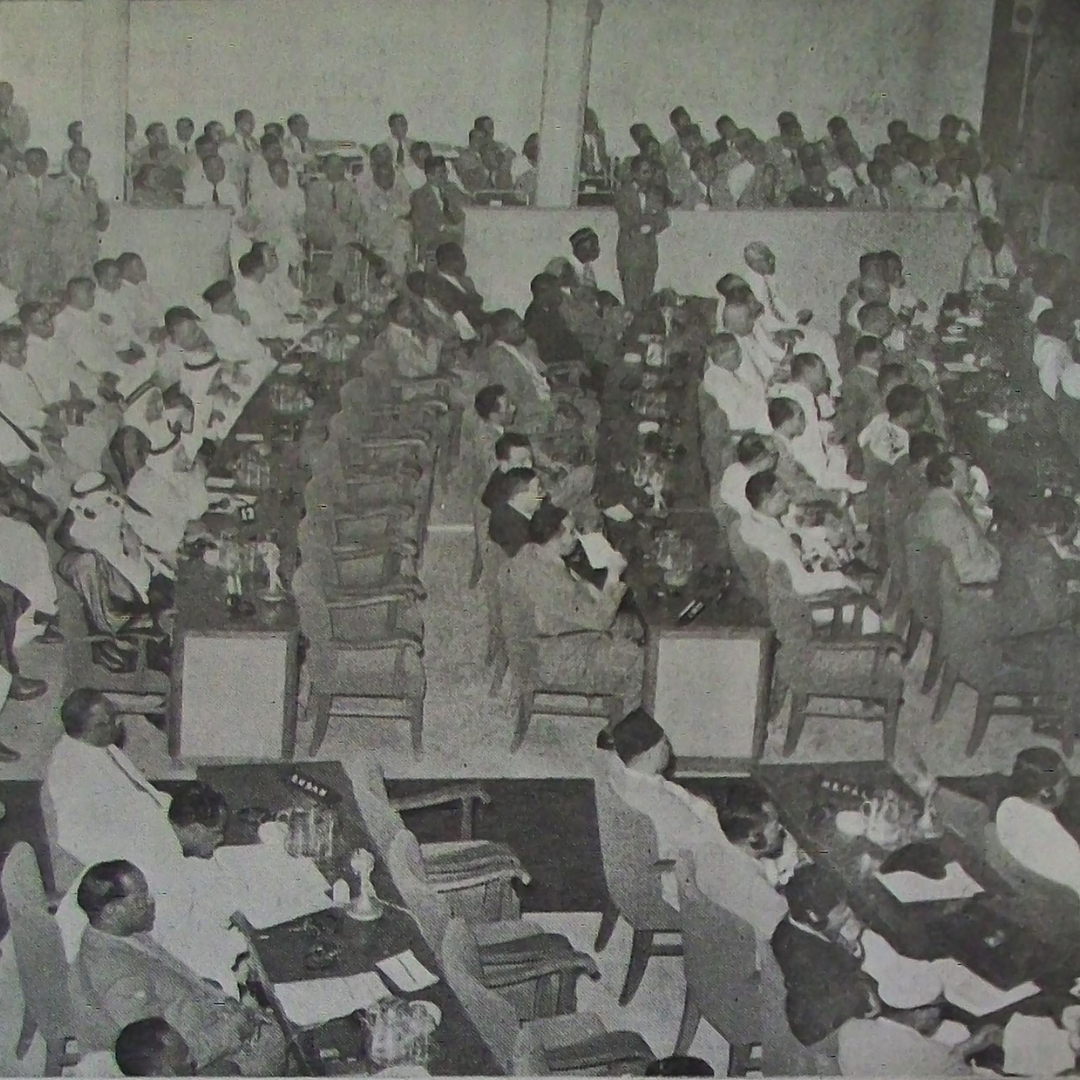
The volume also makes a significant contribution to the history of internationalism from the Third World perspective. Marc Matera’s essay on Pan-African federalism revisits an ambitious regional political imagination. This internationalist form challenged the nation-state as the natural unit of postcolonial order. It included a proposal for a continental-scale socialist development project as an alternative (p. 63). William Figueroa and Taylor C. Sherman provide cases of South-South cooperation that predate and accompany the more familiar Bandung-era diplomacy. Cases covered include the historian Ahmad Ali Kohza’s 1958 visit to China (pp. 185–90), and Indian expertise in post-independence Africa, channeled through UNESCO (pp. 239–49). Together, these essays support the editors’ claim that ‘regionalisms in the Global South were also internationalisms’ (p. 4). They show that global circuits connecting Lagos, Accra, New Delhi, and Havana deserve as much historical attention as those linking Washington, London, and Moscow.
The book practices a genuinely dialogic scholarship, inviting readers to trace connections, draw unexpected parallels, and cultivate creative thinking across contributions that span different geographical and temporal dimensions.
With all its virtues, the one area that remains in motion is the conversation between socialism, internationalism and gender – less a limitation, perhaps, than a work in progress the editors deliberately leave open. That internationalism, for all its transnational scope, remains a predominantly male-dominated sphere is perhaps the most telling void, one that reflects the broader field as much as the editors’ choices. The gendering of socialist and internationalist politics receives comparatively little attention, though this absence itself points toward possible dialogue in future scholarship. Yet in this book, Su Lin Lewis and Wilden Sena Utama open such conversations. The Colombo and Cairo women’s conferences formed a transnational network that was neither a UN project nor a Soviet-front organization (pp. 159–62). While their agendas diverged—the former aiming to be apolitical, the latter emphasizing anti-colonial politics—both represent a specifically Afro-Asian feminist internationalism which is impossible to disentangle from women’s development (pp. 173–74). Regrettably, of the 13 chapters, this is the only one centered on women, with women’s roles addressed only briefly in Osei-Opare’s analysis of their participation in Ghana’s fisheries (pp. 222–24). Additionally, the book’s frequent invocation of “Third World” without a fixed definition might initially read as an oversight, but on reflection it enacts the book’s own argument that these terms were always fluid, contested and shaped by the diverse contexts in which they emerged and circulated. The ambiguity is less a gap than theoretical proposition, one that resists the false coherence of retrospective definition.
Despite those minimal limitations, the important contribution that Socialism, Internationalism, and Development in the Third World has and which makes it distinct from many other collections is its coherence and lively conversations that are sustained across the chapters. The volume practices a genuinely dialogic scholarship, inviting readers to trace connections, draw unexpected parallels, and cultivate creative thinking across contributions that span different geographical and temporal dimensions. If the book’s central argument is that socialist internationalism was never singular, that its multiplicity actively shaped developmental ideas across the Third World during the decolonization era, then the volume’s structure and composition enact this argument precisely. It reveals the polyphonic nature of decolonization and internationalism. Readers are encouraged to think across and between chapters, attending to the complexity of internationalism and its manifestation differently in both theory and practice, while remaining recognizably part of a shared intellectual horizon. The volume marks a significant intervention in the history of internationalism, arriving at a timely moment when interdisciplinary scholars, activists, and the public are actively reopening questions about new possibilities and openings of the world. That it does so amid what can only be described as a dismal and fragmented present makes the urgency of its historical recovery all the more resonant.
Anchana Wachira-asakon is a PhD student in the Department of Asian Languages and Cultures at the University of Wisconsin–Madison. Her research focuses the transnational left and feminist history in Thailand and broader Asia, with a focus on print culture and ephemeral materials as tools of political dissent and storytelling.