

The extraordinary life of Iboja Wandall-Holm
Published by: Amsterdam Publishers
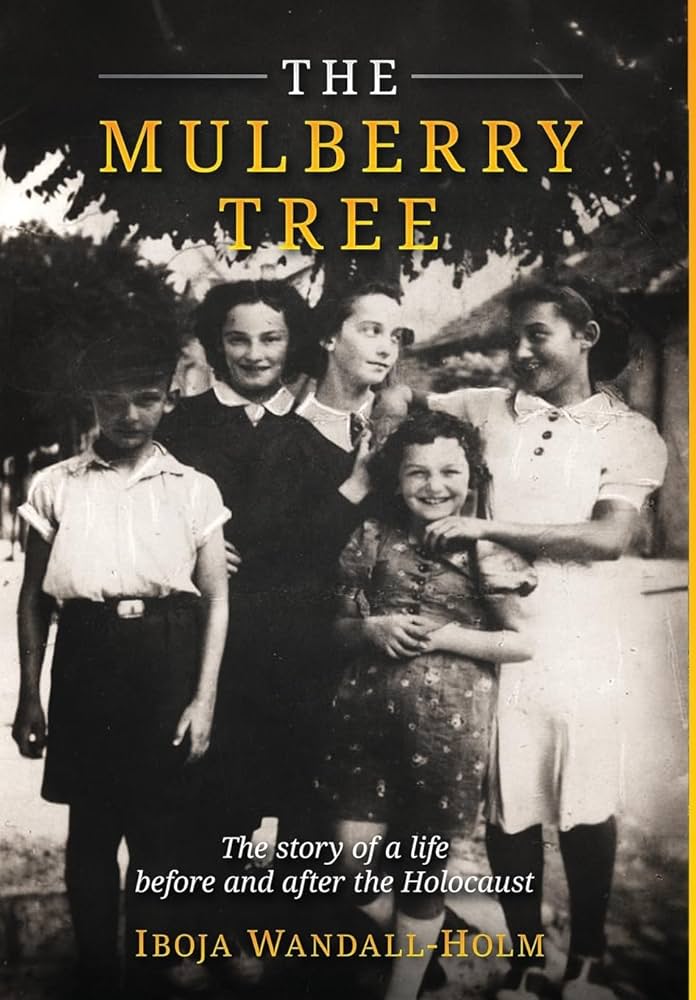
Amsterdam Publishers have published a book that has a longer publishing history: the memoirs of Iboja Wandall-Holm have now been published in English after having already appeared in both Slovak and Danish several times. The first publication was in 1991, in Danish as Morbærtræet (The Mulberry Tree), followed in 2000 by an extended version also in Danish, with the title Farvel til århundredet (Farewell to the Century). In Slovak, the book was published in 2003 under the title Zbohom, storočie (Farewell, Century) and reprinted in 2016 and 2021 as Moruša, its original title. This recent English publication has its origins in the author’s Slovak translation of the Danish original and was translated into English by David Short. The book is part of the series Holocaust Survivor Memoirs World War II.
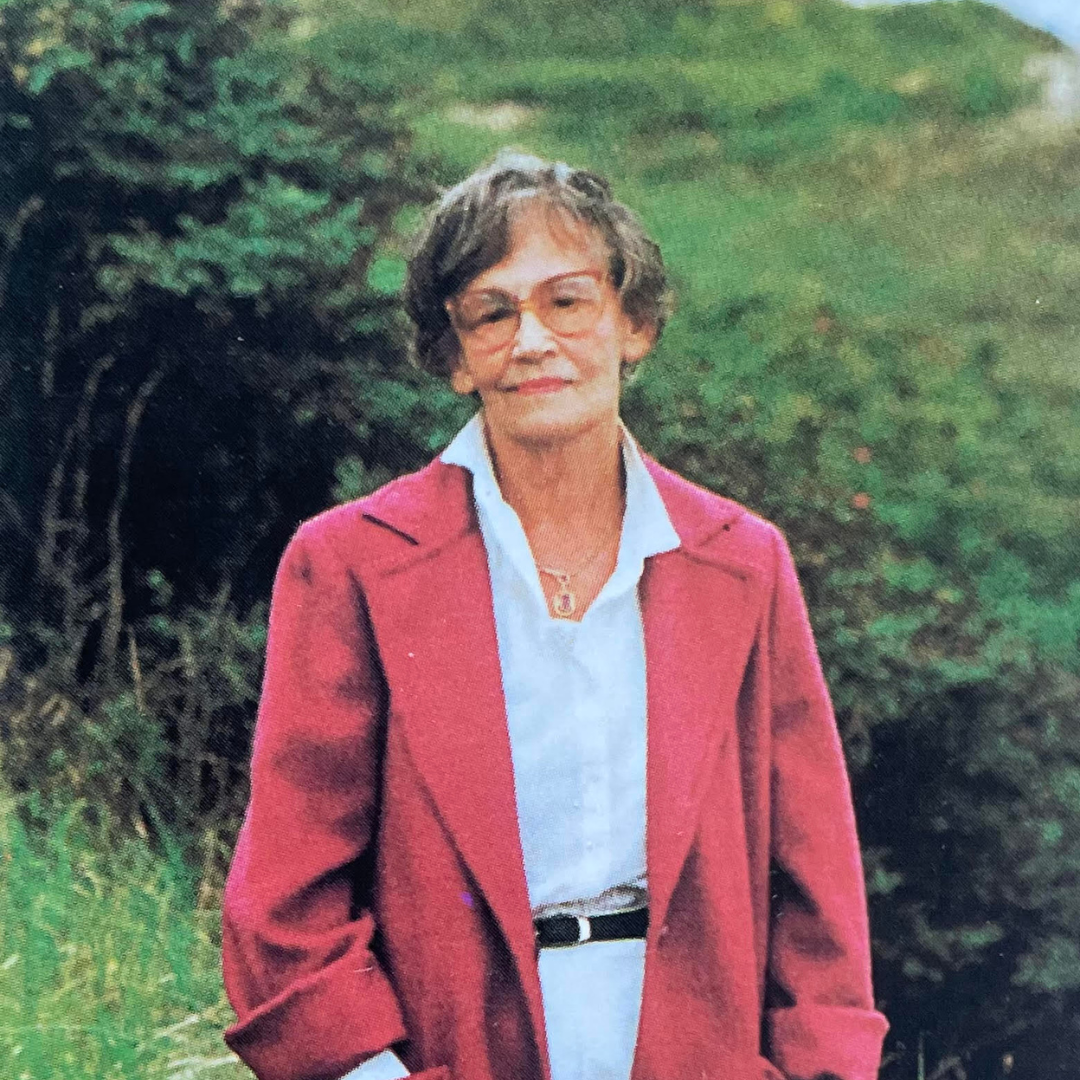
Who is Iboja Wandall-Holm? She was born in Vrbové in 1921 and raised in Liptovský Svätý Mikuláš, a provincial town in the Slovak part of the multicultural pre-war Czechoslovakia. During her childhood she lived among Czechs, Slovaks, Germans, and Hungarians and was exposed to all the languages and several religions. Her early years, described in Book 1, “Once upon a time”, seem quite idyllic; however, she did face anti-Semitic insinuations from her best Catholic friend, Cecilia. A happy childhood and teenage years were gradually overshadowed by the threat of Nazism from Germany, the author confesses. The first chapter culminates with Iboja’s parents sending her and her younger sister, Lila, into hiding in Hungary. At the same time, the first transports of Jews from Slovakia to the concentration camps are being dispatched.
Book 2, “Flight”, describes the efforts to hide and survive in Hungary, which were successful only for a few months. They ended up in a prison and eventually the two sisters were deported to Auschwitz. Life in the hell of the concentration camps (Auschwitz, Birkenau, Ravensbrück) is depicted in Book 3, “Darkness: Pages from a retrospective diary”. These pages bring forth detailed memories of these months – as the author later notes: “I remembered everything.” The style is detailed, documentary, unsentimental, moving. It is an absorbing memoir that catches every reader and draws him into the contents. Wandall-Holm is a fascinating narrator. Still, she remains sober and realistic. We can appreciate the fact that the author does not end her memories with liberation or the return home; we have many such memoirs. However, this publication is significant in also bringing us the experience and history of the post-war years (Book 4, “A long, slow dawning”). After surviving, Iboja Wandall-Holm moves to Prague to study journalism. Later, she worked for Czechoslovak Radio and married a Dane. At first, she was an adherent communist; however, after learning the regime’s strategies, she quickly abandoned this belief. Even more so when she discovered that she was being watched and might be in danger. This fact together with the political situation in Czechoslovakia led her and her husband to the decision to emigrate to Denmark in 1956. They settled in Copenhagen, where she lives until today.
Wandall-Holm’s text is accompanied by unique photographs documenting life both in pre-war Czechoslovakia and in post-war Czechoslovakia and Denmark. The volume also contains several of Wandall-Holm’s poems.
Apart from describing her war years, Wandall-Holm gives us an authentic history of the decades she spent in several European countries. This makes her memoirs unique.
The main text is followed by an Interview with the author, enabling the reader to learn even more about the author’s personal life together with details from other people’s memoirs or about escapees from the camps. The Interview consists of two parts, one by Dobrota Pucherová (2025) and the other by Ján Púček (2016).
Iboja Wandall-Holm’s memoirs are to be praised for her poetic language. This is not surprising, as Wandall-Holm is the author of several books of poetry. The book also contains much dialogue, which makes it easily readable for its audience. At the same time, her clear style makes the book approachable for young readers interested in the Holocaust and modern history. Apart from describing her war years, Wandall-Holm gives us an authentic history of the decades she spent in several European countries. This makes her memoirs unique. We can observe life in pre-war Slovakia, post-war Prague, Liptovský Mikuláš and other places. She recounts her meetings with pre-war friends and compares the Jewish and non-Jewish experience.
Another valuable aspect of these memoirs is the depiction of many of the characters among the author’s co-inmates in the concentration camps. We are able to observe everyday reality in the concentration camps from the perspective of women. The volume is being published at a time when anti-Semitism is on the rise and there are many attempts to doubt the historical facts of the Shoah. Information on the Holocaust is being misused on social media, including with help of AI; therefore, every authentic contribution, such as these memoirs, must be welcomed and appreciated. Although she experienced “hell on earth”, we can see that Iboja Wandall-Holm did not lose her humanity, despite the cruellest experiences that she went through. We are exposed to the depiction of the life before the catastrophe and after it. And, although the author had the greatest reasons to change her attitude towards society and the world, here she stands unbroken, one of the oldest survivors of the Holocaust.
Mgr. Eva Kalousová, Ph.D. studied History, English and American Studies and Translation Studies at Palacký University Olomouc, Czech Republic. She spent several semesters and research visits in UK, USA, Israel, Poland and Romania. She received her PhD from Charles University, Prague. Her dissertation analyses the intergenerational transmission of trauma from the Holocaust, comparing post-war developments in Czechoslovakia and Israel. Her research includes oral histories of survivors in many countries focusing on post-memory, migration, and Czech-German-Jewish coexistence.